

Core Heat Pipe Customization Options
| Pipe Diameters | Pipe Materials | Fin Materials | Fin Pitch Options |
| 9.52mm / 12.7mm / 15.88mm | Copper tube / Aluminum alloy tube | Hydrophilic / Plain / Copper / Anti-corrosion black foil | 2.1mm |
| 24mm | Industrial pure aluminum | One-step extruded industrial pure aluminum | 2.1mm / 2.3mm / 3.2mm / 3.8mm / 5.0mm |
| 25mm / 32mm / 38mm / 48mm | 20# carbon steel / ND steel / Stainless steel | Aluminum / 20# carbon steel / ND steel / Stainless steel | 2.3mm – 15mm |
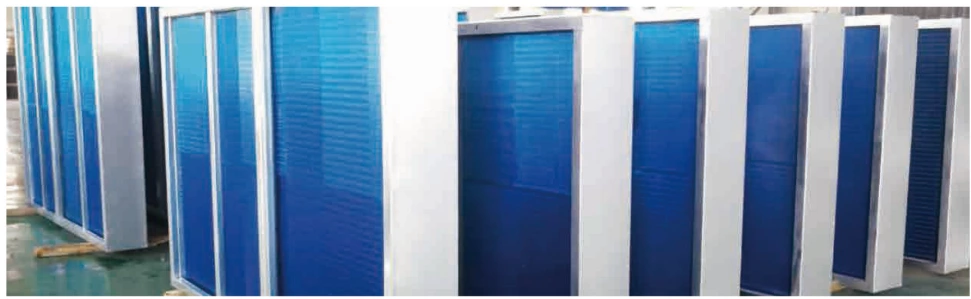
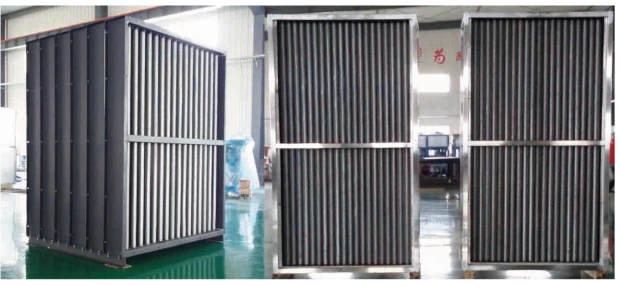
Main Heat Pipe Applications
Heat pipe heat exchangers for fresh air and exhaust air waste heat recovery of central air conditioning systems
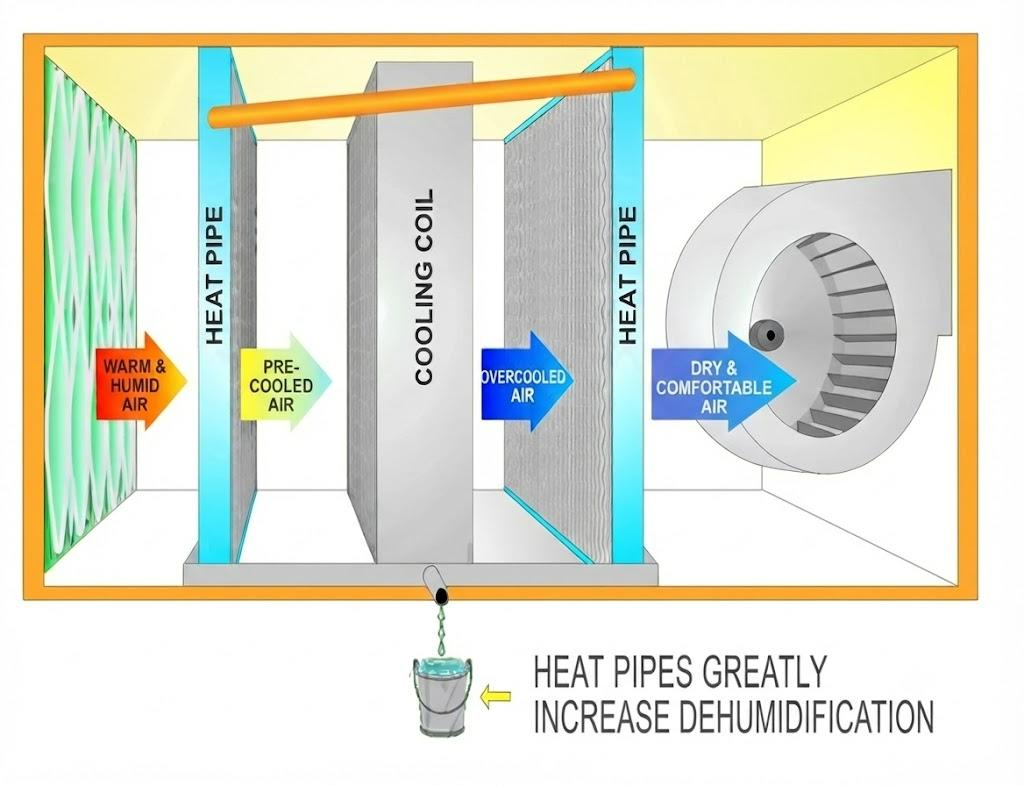
U-type dehumidifying heat pipes for fresh air / all-fresh air units of central air conditioning
Ethylene glycol waste heat recovery equipment
Split-type heat pipe heat exchangers
Heat pipe heat exchangers for fresh air and exhaust air waste heat recovery in laboratories
Industrial waste heat recovery heat pipe heat exchangers (exhaust air temperature range: -40℃ to 300℃)
Heat Pipe Design Guidelines
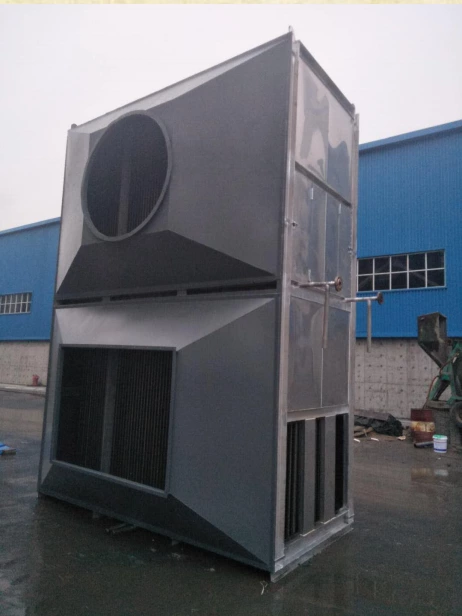
- Fresh air volume / low-temperature side working fluid flow rate (Nm³/h)
- Fresh air temperature / project location (℃)
- Exhaust air volume / high-temperature side working fluid flow rate (Nm³/h)
- Exhaust air temperature / high-temperature side working fluid temperature (℃)
- Relative humidity of exhaust air (%) / moisture content (g/kg)
- Exhaust type: hot air, flue gas from gas-fired boilers, process exhaust gas
- Dust concentration, dust type and impurity type of exhaust air
- Corrosiveness of exhaust air: acidic, alkaline or other special corrosive media
- Dimensional limits of heat exchanger / internal dimensions of air handling unit
- Material requirements for heat exchanger
- Required waste heat recovery efficiency of heat exchanger / target temperature of preheated fresh air (low-temperature working fluid)
- Other special requirements
Application Scenarios
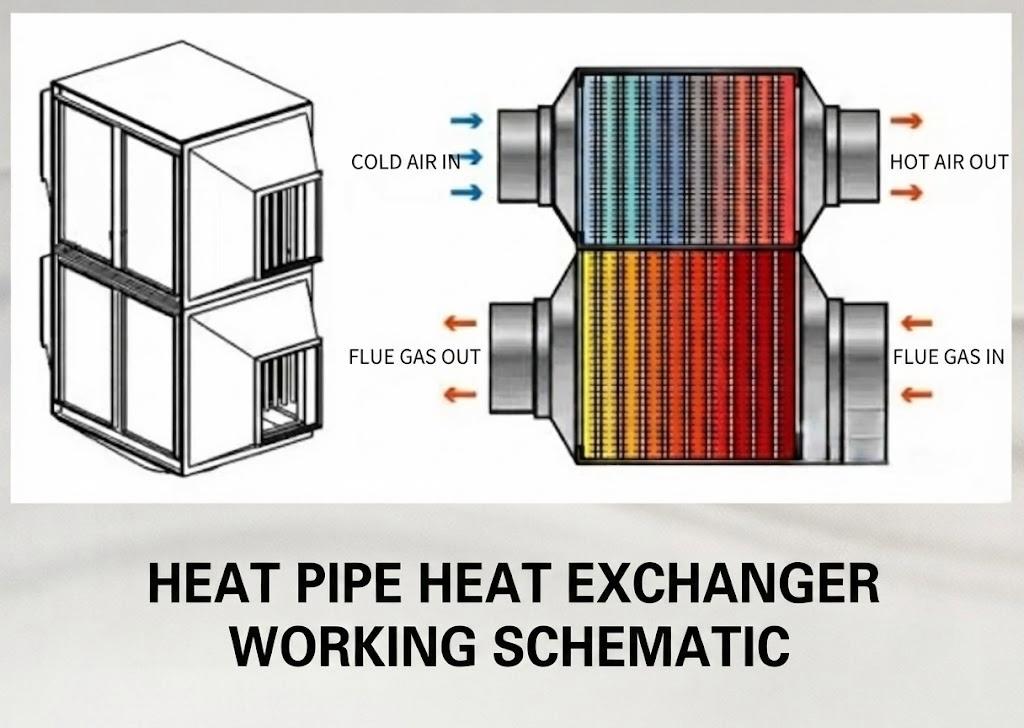
- Waste heat recovery of fresh air and exhaust air for central air conditioning units
- U-type heat pipes for fresh air units / all-fresh air units of central air conditioning
- Waste heat recovery from exhaust of dryers, vibrating fluidized beds, fluidized beds and spray dryers
- Flue gas waste heat recovery for natural gas-fired boilers
- Exhaust waste heat recovery for coating machines and setting machines
DTDX Solutions for Custom Heat Pipes
Compact Co-located Heat Pipe Heat Recovery Solution
In this scenario, fresh air and exhaust air heat exchange, fresh air unit and exhaust air unit are placed back-to-back or stacked up and down (fresh air and exhaust air are in the same machine room, close to each other).
Here we recommend the following types of heat pipes:
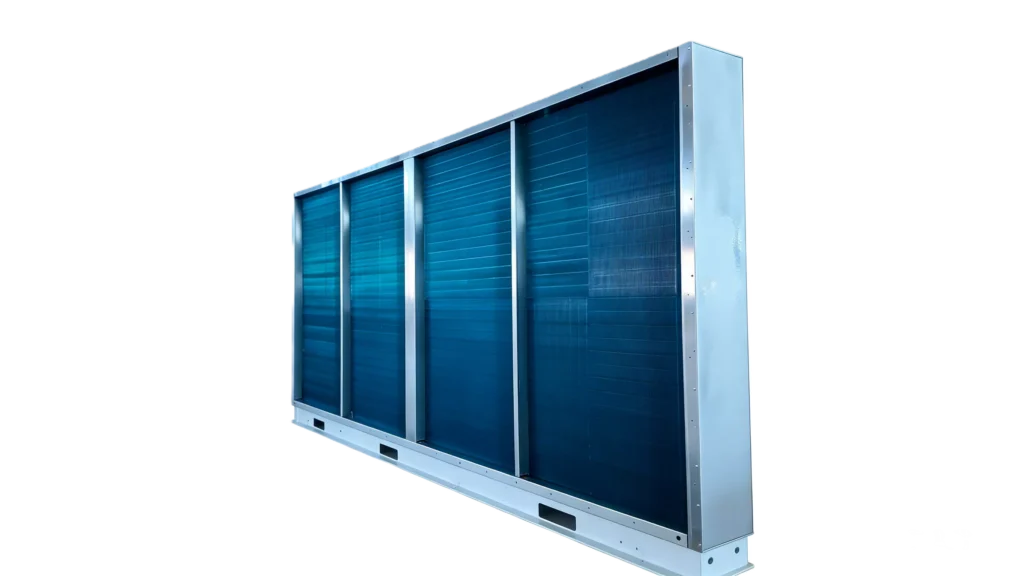
3D Capillary Heat Pipe Heat Exchanger
High heat transfer efficiency (60%–80%), supports both vertical and horizontal mounting.
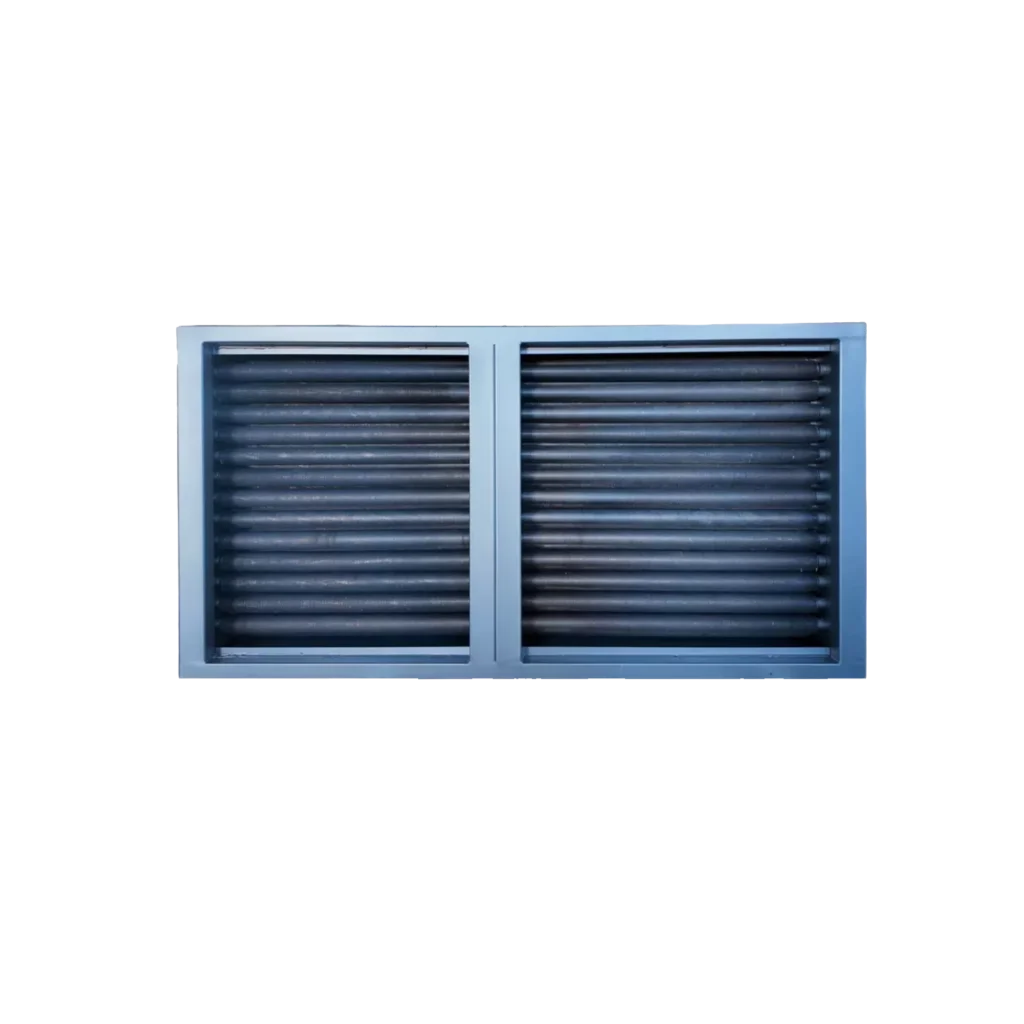
4D Reversible Heat Pipe Heat Exchanger
Ideal for HVAC end-unit retrofitting, 100% air-to-air isolation, zero cross-contamination.
If efficiency is prioritized, 4D heat pipe can be selected; if price is prioritized, 3D heat pipe can be selected.
Remarks:
- If the unit size is not provided, select according to the conventional 2.5m/s wind speed.
- Temperature parameters and project location are optional.
- Efficiency requirements can be marked; if no efficiency requirement, select according to conventional standards.
- If quantity is not specified, quote based on single unit.
- 3D and 4D heat pipe heat recovery are used in both winter and summer. The fresh air and exhaust air units need to be used back-to-back, spliced left and right; if the heat pipes of the upper and lower units are placed vertically, they can only be used in a single season: fresh air below and exhaust air above for summer heat recovery; exhaust air below and fresh air above for winter heat recovery.
- For both winter and summer use, the units are placed left and right, the fresh air and exhaust air units need to have the same height, and the width can be different (according to the air volume). For vertical units, the fresh air and exhaust air units are placed up and down, the width needs to be the same, and the height can be different.
- Heat pipe material: aluminum pipe / copper pipe; sheet metal material: galvanized sheet / stainless steel sheet. If no requirement, conventional aluminum pipe / galvanized sheet will be used.
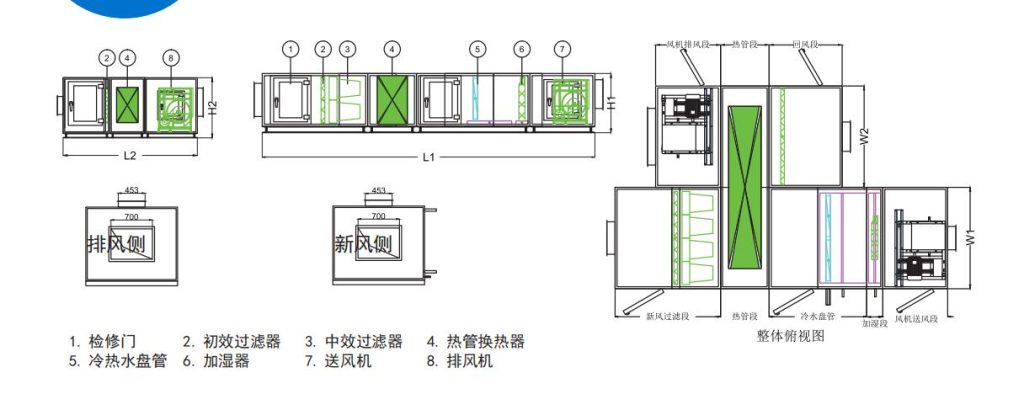 Left/right unit (can be used in both winter and summer)
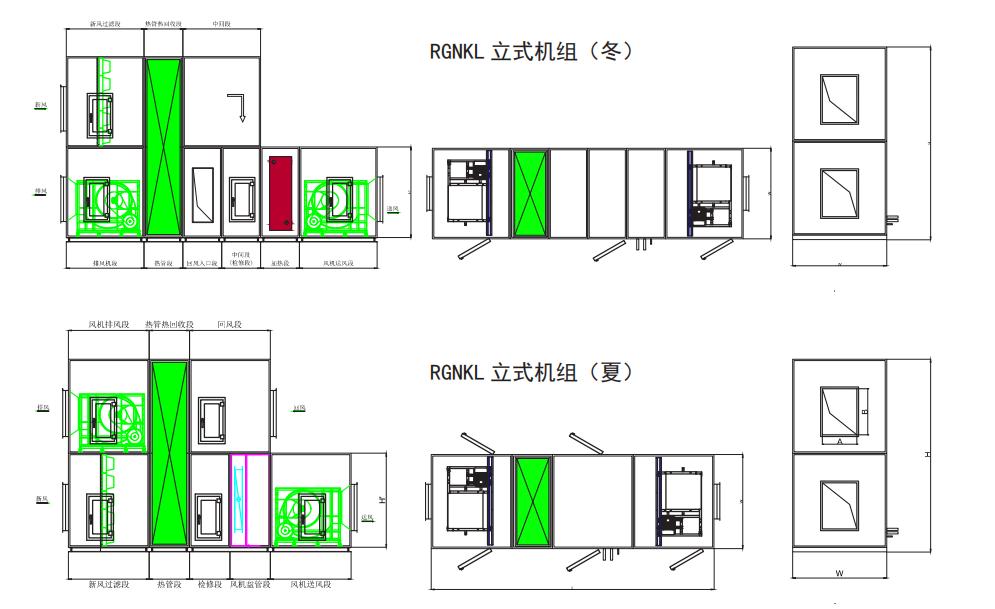 Vertical unit (for single-season use)
Remote Split-Type Heat Pipe Heat Recovery Solution
In this scenario, fresh air and exhaust air heat exchange, fresh air unit and exhaust air unit are not in the same machine room, there is a distance between the fresh air and exhaust air units.
Here we recommend the following types of heat pipes:
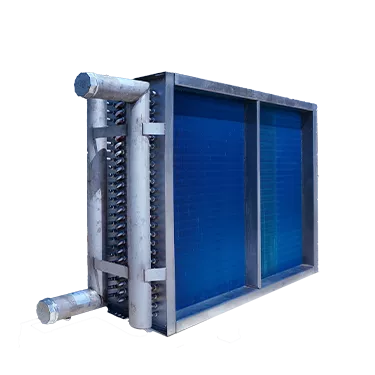
Glycol Heat Recovery System
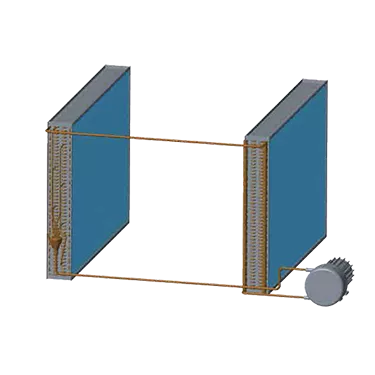
Split-Passive Heat Pipe Energy Recovery Systems
When the distance between fresh air and exhaust air exceeds 50m, glycol heat recovery is generally selected. Within 50m, both glycol heat recovery and split type heat pipe heat recovery are optional. Split type heat pipe is relatively expensive, while glycol is relatively cheap. Select glycol heat recovery if glycol solution is marked; select split type heat recovery if refrigerant is marked.
Remarks:
- If the unit size is not provided, select according to the conventional 2.5m/s wind speed.
- Temperature parameters and project location are optional.
- Efficiency requirements can be marked; if no efficiency requirement, select according to conventional standards.
- If quantity is not specified, quote based on single unit.
- For ethylene glycol heat recovery and split heat pipe heat recovery, configurations may involve one fresh air stream corresponding to one or several exhaust air streams, or several fresh air streams corresponding to one or several exhaust air streams. Please provide the air volume, dimensions, and the mapping relationship between the fresh air and exhaust air streams respectively.
- Specify the selection of ethylene glycol solution for ethylene glycol heat recovery, which operates on a flooded circulation system.
- Specify the selection of refrigerant for split heat recovery. The distance between the fresh air and exhaust air units for split heat recovery generally should not exceed 50 m.
- Heat pipe materials: Aluminum tubes, copper tubes, or stainless steel tubes.
- Sheet metal materials: Galvanized steel sheets or stainless steel sheets.
- If there are no specific requirements, standard materials (aluminum/copper tubes and galvanized steel sheets) will be applied.
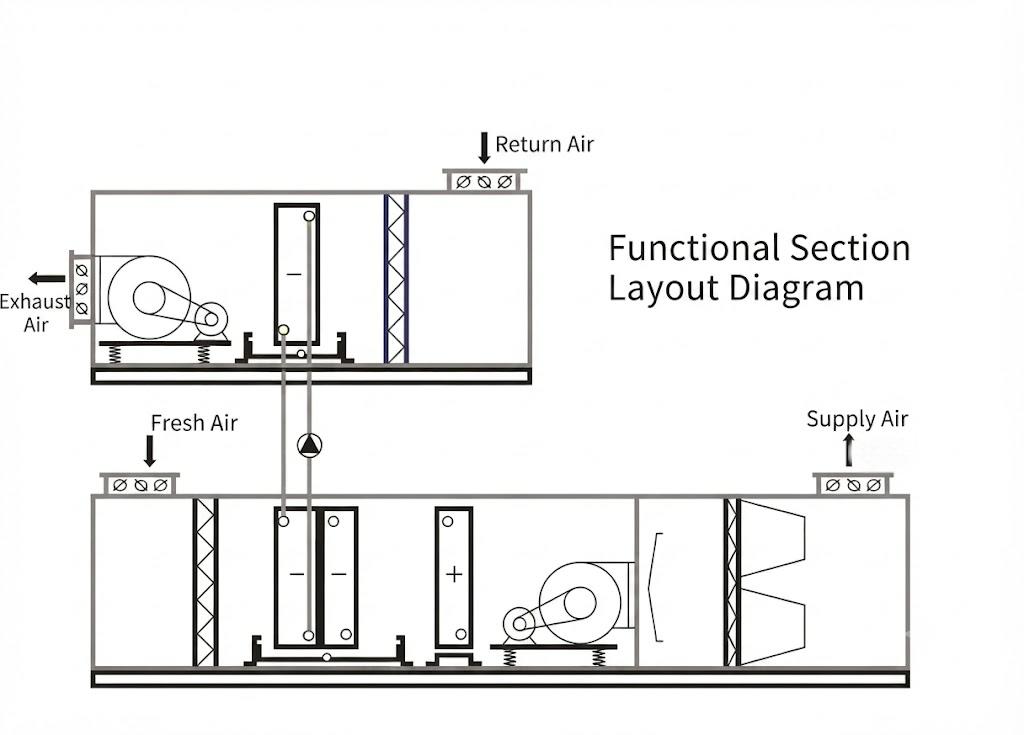
Advanced Fresh Air Dehumidification Solution
In this scenario, dehumidification of fresh air unit in summer (has no relation with exhaust air unit), installed before and after the surface cooler.
Here we recommend the following types of heat pipes:
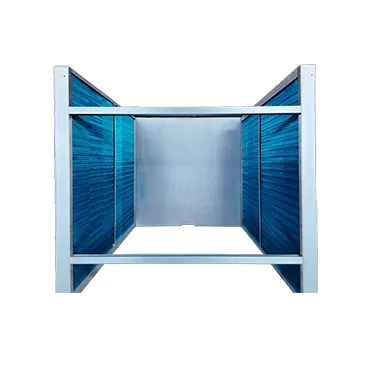
U-type Wrap-Around Dehumidification Heat Pipe Exchanger
Remarks:
- If the unit size is not provided, select according to the conventional 2.5m/s wind speed.
- Temperature parameters and project location are optional.
- Efficiency requirements can be marked; if no efficiency requirement, select according to conventional standards.
- If quantity is not specified, quote based on single unit.
- Cooling coil dimensions are optional. If there are no special requirements, reserve 500 mm for the U-shaped heat pipe U-ports. If the cooling coil thickness is specified, the dimensions can be clearly determined.
- Heat pipe material: aluminum pipe / copper pipe; sheet metal material: galvanized sheet / stainless steel sheet. If no requirement, conventional aluminum pipe / galvanized sheet will be used.
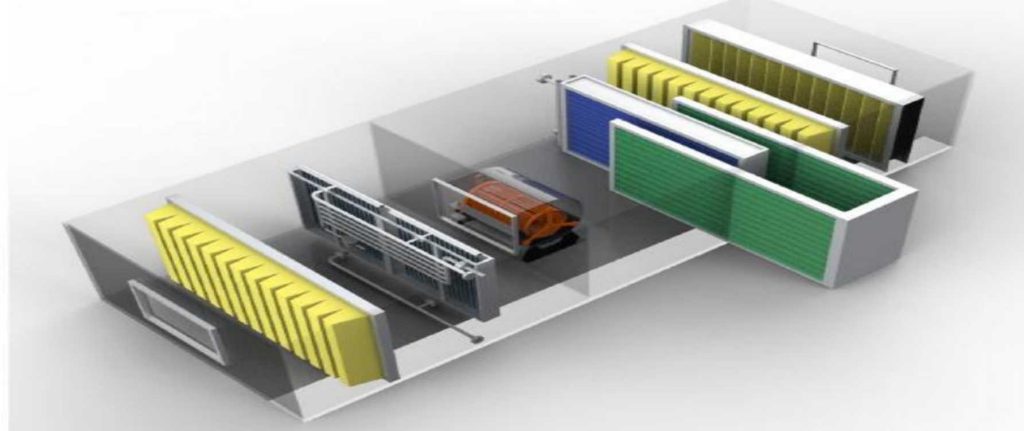 Schematic Diagram of U-Type Heat Pipe Installation in Fresh Air Unit
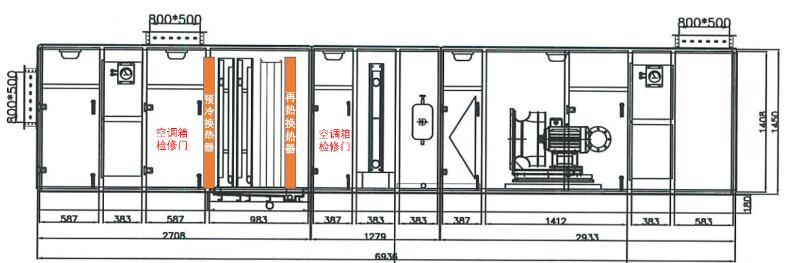 The orange part is the U-type dehumidification heat pipe, which wraps the surface cooler (before and after the surface cooler)