What is Split-Passive Heat Pipe?
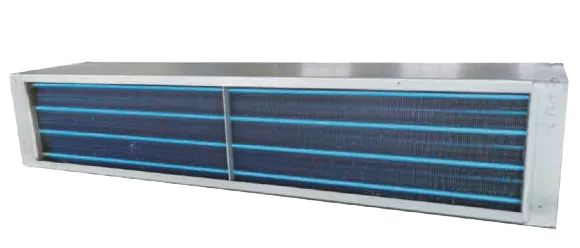
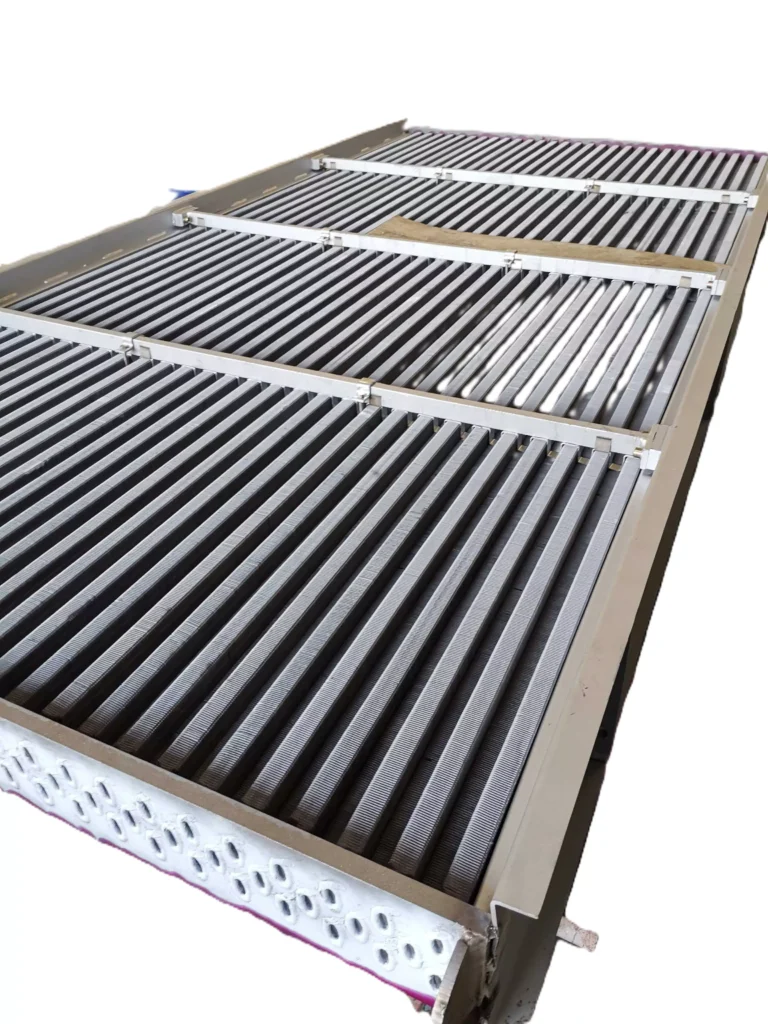
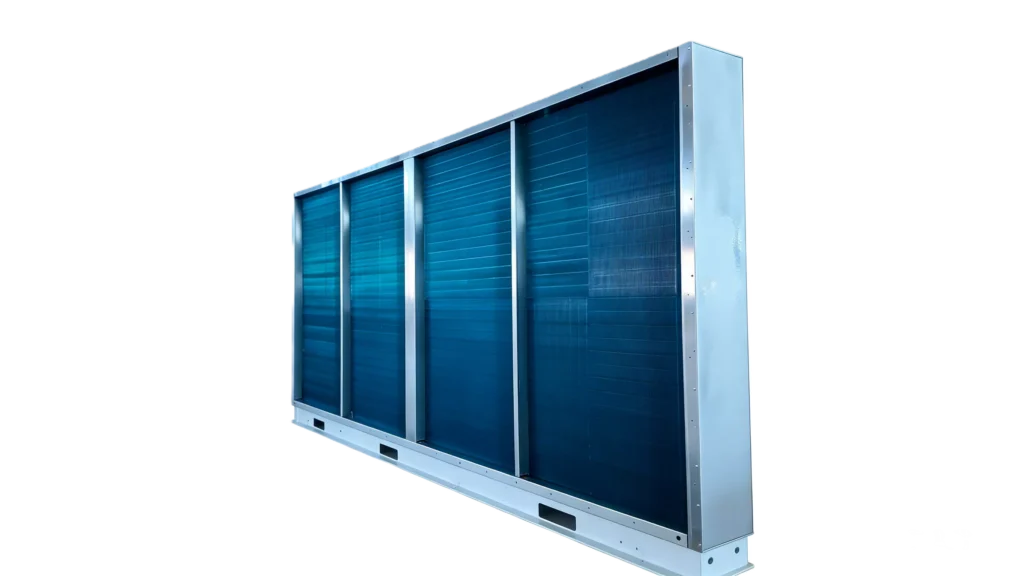
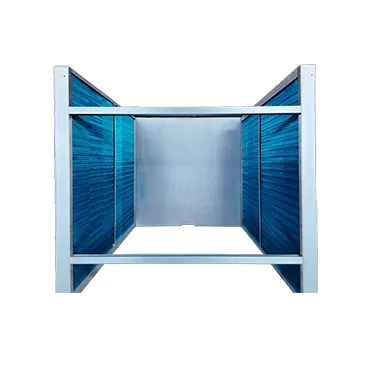
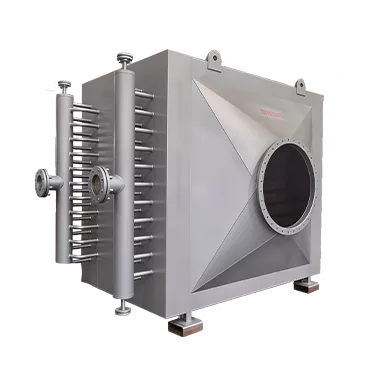
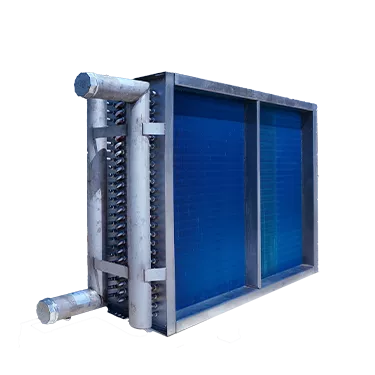
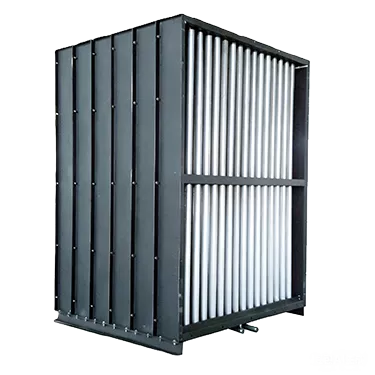
Detian Dixing’s split-type passive heat pipe is a high-efficiency heat recovery equipment developed based on the “split controllable” heat pipe technology. Through an innovative split-type design and intelligent control technology, it realizes heat exchange between fresh air and exhaust air, and is widely applied in the field of energy-saving renovation of air conditioning systems.
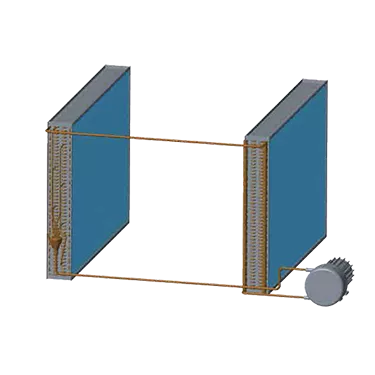
Split Heat Pipe Heat Recovery Unit
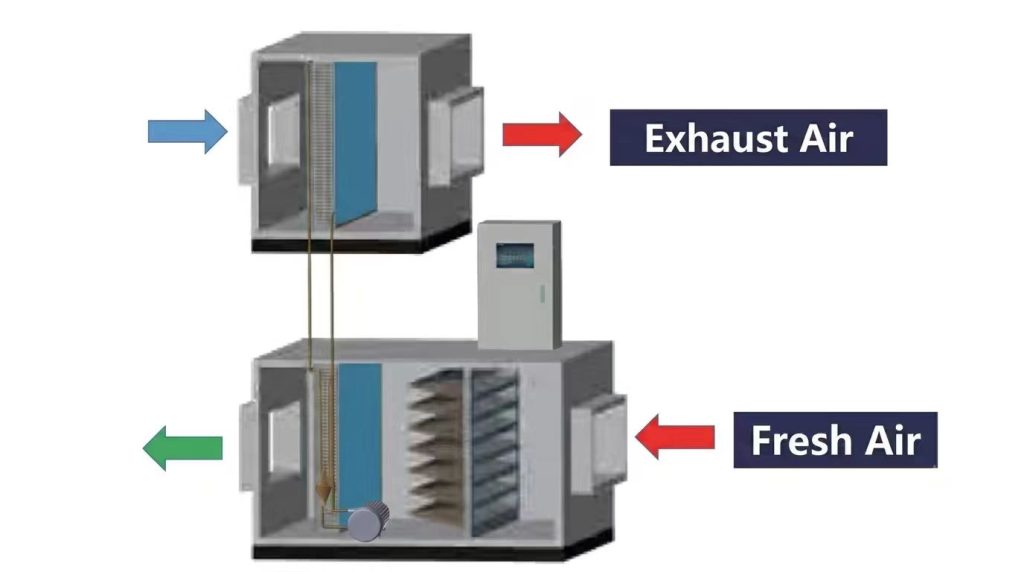
Operating Principle of a Heat Pipe Heat Recovery System
1
Flexible Split Design: Separate evaporator and condenser units allow for versatile installation layouts.
3
Precise Temperature Control: Integrated control modules regulate heat transfer capacity, achieving a supply-air temperature accuracy of ±0.5°C.
2
Seasonal Energy Recovery: Uses refrigerant circulation for bi-directional heat exchange between exhaust and fresh air (cooling in summer, heating in winter).
Operating Principle of a Heat Pipe Temperature-Control Unit
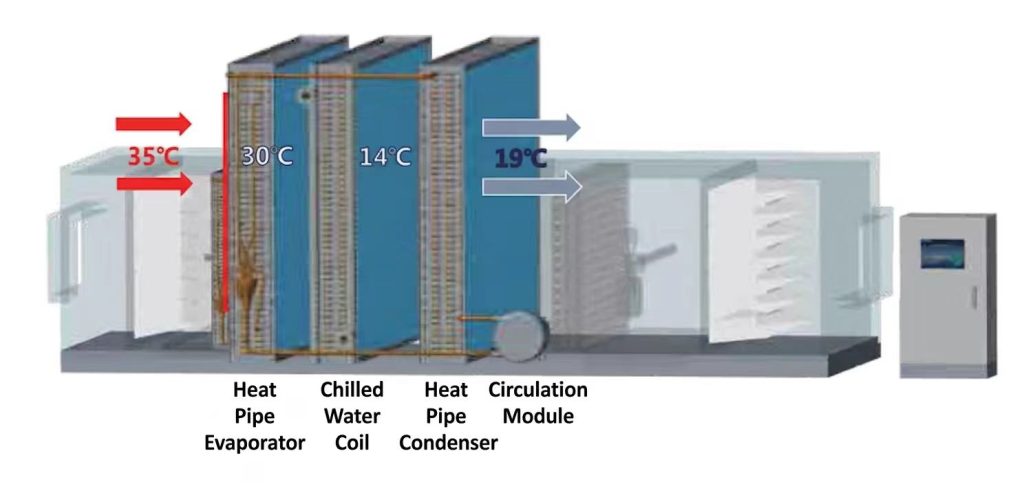
- Closed-Loop Configuration: Heat exchangers installed upstream and downstream of the chilled-water coil are connected via a refrigerant module to form a closed loop.
- Efficient Energy Recovery: Recovers cooling energy from outgoing air to pre-cool incoming air, balancing the heat transfer for optimal temperature control.
- Precise Temperature Control: Integrated flow and power modules regulate heat transfer capacity, ensuring supply-air temperature accuracy within ±0.5°C.
Core Technical Principles
Split-Type Structural Design
Featuring independent evaporator and condenser sections, the unit offers flexible installation across separate spaces (such as fresh air and exhaust air pipelines). This overcomes the space limitations of traditional equipment, making it highly adaptable to complex building structures.
Bidirectional Heat Exchange Mechanism
- Summer Mode: The cold energy of exhaust air is transmitted to the heat pipe evaporator through the refrigerant circulation module to cool the fresh air; at the same time, the recovered heat from fresh air is transferred to the heat pipe condenser, making the temperature of exhaust air rise synchronously.
- Winter Mode: The direction of heat transfer is opposite to that in summer, realizing reverse energy recovery.
Intelligent Control System
Equipped with an independent control unit, it can realize:
- Start-stop control of the heat pipe heat exchange system
- Power and flow regulation (supporting dynamic adjustment of heat exchange capacity)
Three Core Advantages
Safe and Reliable Heat Exchange Mechanism
It features the characteristic of “heat transfer without mass transfer”, which completely eliminates the risk of cross-contamination between fresh air and exhaust air and ensures indoor air quality.
High Efficiency and Energy-Saving Performance
Equipped with power-type controllable heat pipe technology, its heat exchange efficiency is increased by more than 30% compared with traditional heat pipes, significantly reducing the energy consumption of air conditioning systems.
Flexible Adaptability
The split-type design allows the fresh air/exhaust air pipelines to be separated by a maximum distance of 30 meters (specific parameters are subject to the product manual), supporting cross-floor and cross-area arrangement, and is especially suitable for renovation projects of existing buildings.
Typical Application Scenarios
- Air conditioning systems of commercial complexes
- Energy recovery in industrial clean rooms
- Places with stringent air quality requirements such as hospitals and laboratories
- Waste heat utilization in data centers
Service Support
1
Customized design
Provide customized materials, row numbers and structures according to working condition requirements.
2
Technical consulting
Professional team assists in type selection and system optimization.