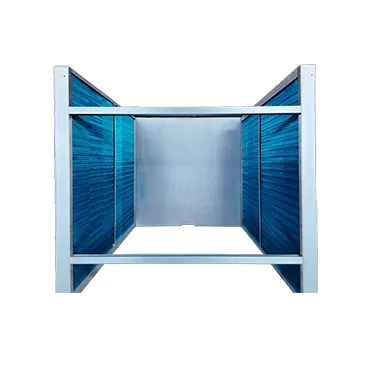
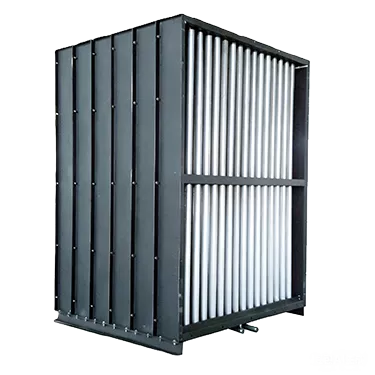
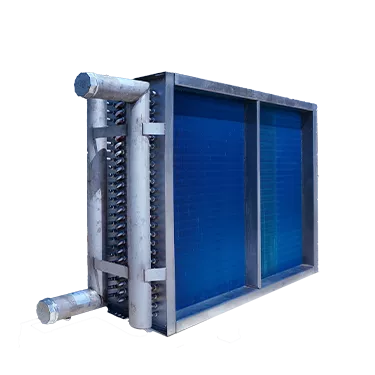
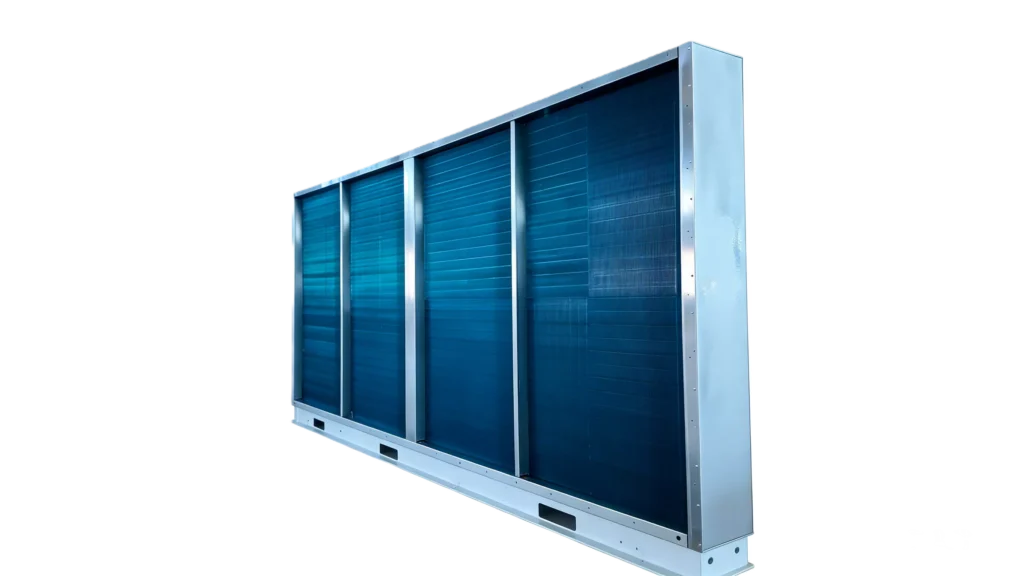
As global industry advances, the demand for efficient energy utilization has never been higher. With over 80% of energy production and consumption involving thermal conversion, heat exchangers serve as the cornerstone of energy conservation.
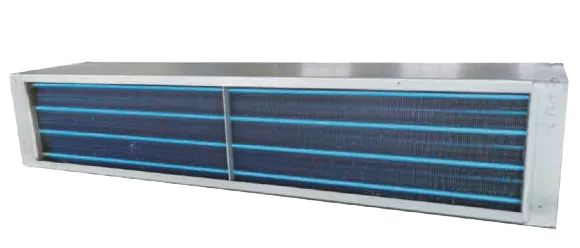
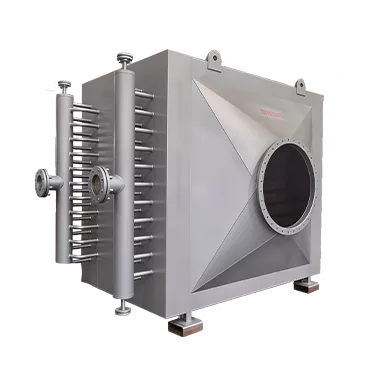
Traditional heat exchangers often suffer from application-specific limitations: equipment designed for air-to-air exchange rarely suits liquid-to-liquid processes, and low-pressure designs often fail in high-temperature or high-pressure environments. The Phase Change Plate Fin Heat Exchanger addresses these challenges through a revolutionary thermal-wall design. While it operates on the same core principles as traditional heat pipes, it transitions from a tubular structure to a high-efficiency plate-with-fin configuration, offering superior compactness and design flexibility for a broader range of industrial applications.
Structural Innovation: The Thermal-Wall Design
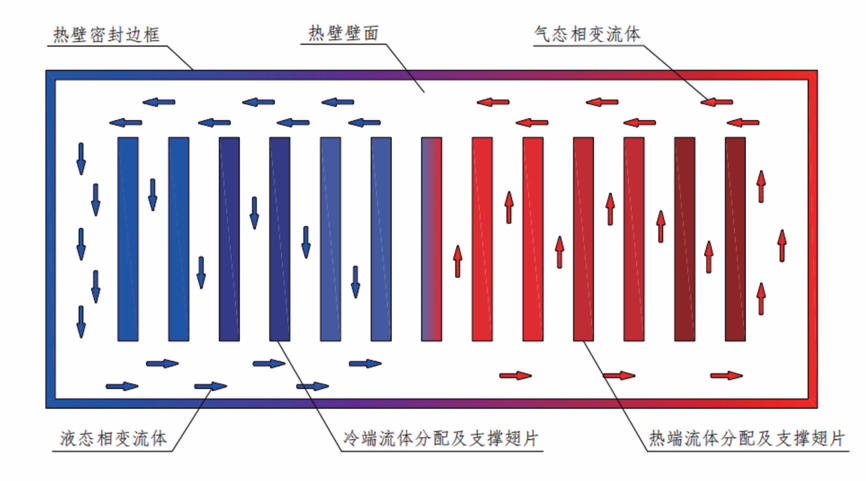
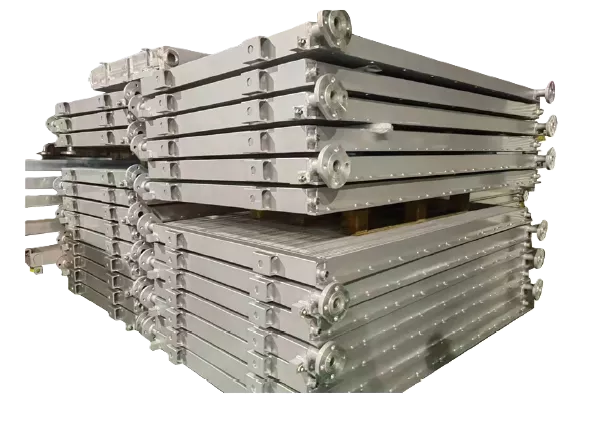
The core of the unit is the thermal-wall, a rectangular or annular vacuum-sealed chamber containing a phase-change working fluid.
- Plate-with-Fin Construction: Each thermal-wall consists of an internal structural matrix (internal support) enclosed by thin-film partition walls. This “plate-with-fin” structure provides the necessary strength to withstand external fluid pressure while maximizing the heat transfer surface area.
- Optimized Two-Phase Flow: The internal matrix creates dedicated horizontal and vertical channels. This separation prevents interference between vapor and liquid phases, eliminating interphase resistance and capillary tension. The result is a significantly accelerated phase-change cycle and higher thermal efficiency.
- Modular Zones: The exterior flow paths are divided into distinct heat absorption (evaporation) and heat rejection (condensation) zones. This allows for efficient, long-distance thermal exchange between the internal phase-change fluid and the external process mediums.
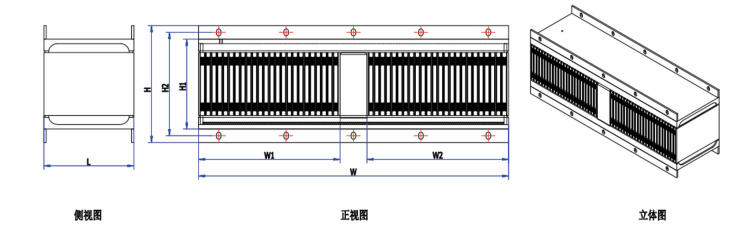
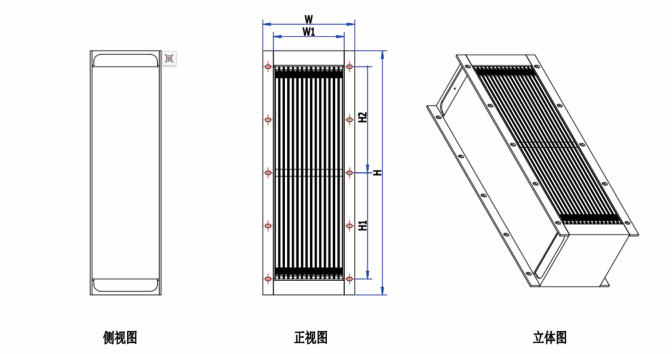
Key Advantages:
- Superior Volumetric Efficiency: The plate-based design provides a significantly larger surface area than traditional tubular heat pipes, ensuring a much more compact footprint for the same thermal load.
- Omni-Directional Flow: Unlike heat pipes that are often restricted by gravity or specific axial orientations, the thermal-wall design accommodates vertical, horizontal, and inclined flow patterns with ease.
- Universal Media Compatibility: It delivers high-efficiency performance across all media types—including liquid-to-liquid, gas-to-gas, and liquid-to-air—making it a more versatile and economical alternative to standard shell-and-tube or plate-fin exchangers.
- Zero Interphase Resistance: By utilizing dedicated evaporation and condensation channels, the system prevents two-phase mixing, which accelerates fluid circulation and enhances heat response times.
- Reduced Pressure Drop: The optimized exterior fin geometry ensures lower fluid resistance and a smaller pressure drop compared to dense heat pipe bundles, reducing overall system pumping costs.
- Material and Cost Savings: Structural integrity is maintained by external thick-walled frames rather than the heat transfer surfaces themselves. This allows for ultra-thin internal partition walls, reducing metal consumption and costs while increasing pressure resistance.
- Simplified Maintenance: The modular “plate-with-fin” design makes leak detection and welding repairs straightforward. The internal fin bundles can be extracted for cleaning or replaced without dismantling the entire system.
- Ultra-Long Distance Transfer: While standard heat pipes are limited by length, this system can be integrated with compressors or circulation pumps to facilitate heat transfer over extreme distances.
- Multi-Zone Flexibility: The rectangular thermal-wall configuration allows for multiple evaporation or condensation zones within a single unit, providing a level of system flexibility that traditional heat pipes cannot match.
- Enhanced Anti-Fouling: Since the thermal-walls and fins are typically oriented vertically, the equipment is less prone to dust accumulation and scaling, ensuring consistent performance in “dirty” industrial environments.
Schematic Diagram of Internal Phase-Change Fluid Circulation within a Single Thermal-Wall