

Cryogenic Heat Pipe: Core Technology for High-Efficiency Low-Temperature Heat Transfer
I. Basic Definition and Working Principle
1. Core Definition
A cryogenic heat pipe is a closed, vacuum phase-change heat transfer device filled with a low-temperature-adapted working fluid. It circulates the working fluid by capillary force or gravity to efficiently transfer heat from the hot end (evaporator section) to the cold end (condenser section) without external power input.
2. Working Cycle Mechanism
| Stage | Process Description | Heat Transfer Characteristics |
| Evaporator section | Absorbs heat, evaporates the working fluid into vapor, and creates a small pressure difference | Uses latent heat of vaporization; extremely high heat transfer coefficient |
| Adiabatic section | Vapor flows quickly to the condenser section under pressure difference | Very low heat loss; gentle temperature gradient |
| Condenser section | Releases heat, vapor condenses into liquid | Releases latent heat of condensation; achieves high-efficiency heat dissipation |
| Reflow process | Liquid returns to the evaporator section via a wick or gravity | Forms a self-sustaining cycle; no moving parts |
II. Structural Composition and Key Design
1. Basic Structural Components
1
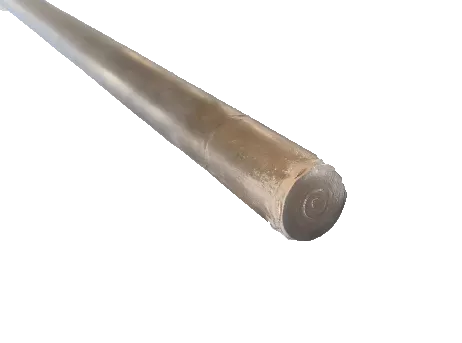
Tube shell: Usually copper, aluminum, stainless steel or titanium alloy, ensuring mechanical strength and sealing at low temperatures
2
Wick: Porous structure (sintered metal powder, grooves, wire mesh, etc.) that provides capillary driving force for liquid return
3
Working fluid: Low-temperature-adapted fluid selected according to the operating temperature (see below)
4
Vacuum environment: The tube is evacuated to 10⁻³~10⁻⁴ Pa to lower the boiling point of the working fluid and enhance phase-change heat transfer
2.Selection Principles and Common Types of Cryogenic Working Fluids
| Working Fluid Type | Applicable Temperature Range | Typical Application Scenarios | Key Characteristics |
| Liquid nitrogen | -196 °C ~ -160 °C | Superconducting cooling, laboratory refrigeration | High latent heat of vaporization; safe and eco-friendly |
| Liquid oxygen | -183 °C ~ -150 °C | Aerospace propulsion systems, cryogenic testing | Strong oxidizing property; requires special compatible materials |
| Liquid ammonia | -77 °C ~ -33 °C | Industrial refrigeration, low-temperature waste heat recovery | Moderate pressure; good heat transfer performance |
| Methanol / ethanol | -98 °C ~ -20 °C | Conventional low-temperature equipment, food freezing | Low cost; readily available |
| CFC alternatives | -60 °C ~ 0 °C | Environmentally friendly refrigeration systems | Zero ODP; meets environmental requirements |
3.Selection Principles and Common Types of Cryogenic Working Fluids
The wick of a cryogenic heat pipe must provide:
- High capillary pressure (to overcome increased liquid viscosity at low temperatures)
- Low thermal resistance (to ensure heat transfer efficiency)
- Frost-heave resistance (to prevent structural damage at low temperatures)
III. Core Classification and Technical Characteristics
Subclassification by Operating Temperature
- Ultra-cryogenic heat pipes: -273 °C ~ -100 °C, suitable for extreme low-temperature media such as liquid helium and liquid hydrogen
- Medium low temperature heat pipes: -100 °C ~ 0 °C, used in conventional cryogenic refrigeration and industrial applications
Classification by Driving Mode
- Capillary-driven type: Driven by capillary force from the wick; can be installed at any angle
- Gravity-assisted type: Relies on gravity for liquid return; must be installed vertically or inclined (evaporator section at the bottom)
- Loop Heat Pipe (LHP): Separated structure; evaporator and condenser connected by tubes, suitable for complex layouts
Core Advantages of Cryogenic Heat Pipes
- Ultra-high heat transfer efficiency: Equivalent thermal conductivity can reach 1000~10000 times that of pure copper, far exceeding traditional conductive materials
- Low resistance & low energy consumption: Airflow resistance reduced by 20%~50%; compatible with low-power fans and low operating energy consumption
- Precise temperature control: Operating temperature difference controlled within 1~5 °C for high-precision temperature uniformity
- Flexible structure: Can be shaped arbitrarily to fit narrow spaces and complex installations
- High reliability: No moving parts; service life over 100,000 hours; low maintenance cost