Ethylene Glycol Heat Recovery System
1. Product Overview
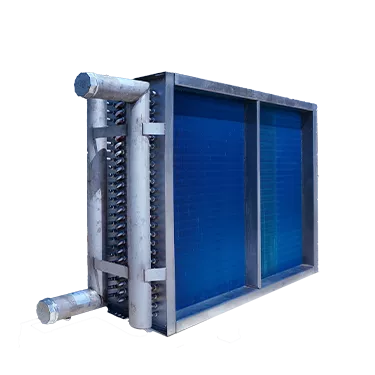
The Ethylene Glycol Heat Recovery System is a high-efficiency energy-saving solution launched by Beijing Detian Dixing Technology Development Co., Ltd. It is mainly applied to heat exchange between fresh air and exhaust air systems to realize energy recycling. With ethylene glycol solution as the refrigerant carrier, the system transfers heat between fresh air and exhaust air without direct contact, and is suitable for scenarios with high air quality requirements that need to balance energy saving and anti-freezing.
2. Core Principles
The system adopts an independent fresh air and exhaust air circulation design, connecting fresh air and exhaust air through an intermediate ethylene glycol solution pipeline. When exhaust air (high/low temperature) passes through the heat exchanger, the ethylene glycol solution absorbs or releases heat, and then transfers the heat to the fresh air side to achieve bidirectional heat recovery. Water can be used as the refrigerant carrier in summer, while the anti-freezing performance of ethylene glycol solution ensures the safe operation of the system in winter.
3. Structural Features
Flexible Layout
The fresh air and exhaust air systems are completely independent, and fresh air units and exhaust air units can be flexibly configured as required, with only pipelines and water pumps for connection, saving installation space.
Zero Fresh Air Contamination
There is no direct contact between fresh air and exhaust air, avoiding cross-contamination and ensuring safe and reliable air quality. It is suitable for places with high sanitary requirements such as hospitals and laboratories.
Easy Maintenance
The heat exchanger has no moving parts, resulting in low daily maintenance costs and high stability for long-term operation.
Space-Saving
The recovery coil in the fresh air unit can be integrated with the surface cooling coil, reducing the floor area of the equipment
Reliable Anti-Freezing
The freezing point of ethylene glycol solution is adjustable with its concentration (selected according to the outdoor temperature in winter). No additional anti-freezing measures are needed in winter, ensuring the stable operation of the system in low-temperature environments.
4. Application Scenarios
HVAC System
– District cooling/heating: The ethylene glycol solution circulates between buildings to recover waste heat emitted by air conditioning systems for heating water or spaces, reducing reliance on traditional energy sources.
– Ground source/air source heat pump: Ethylene glycol acts as a refrigerant carrier to help extract heat from the ground or air and improve heat pump efficiency.
Food and Pharmaceutical Industry
– Dairy and beverage processing: Recover waste heat from processes such as sterilization and pasteurization for preheating raw materials or cleaning water.
– Pharmaceutical equipment: Maintain a constant temperature and recover heat in freeze dryers and reaction tanks.
Building Energy-Saving Renovation
Existing building upgrading: Renovate central air conditioning through the ethylene glycol heat recovery system to reduce carbon emissions, such as the renovation of old industrial plants.
5. Selection Notes
– Air velocity control: It is recommended that the air velocity on the windward side of the coil be ≤2.5m/s to ensure heat exchange efficiency.
– Refrigerant carrier selection: Water can be used when the outdoor temperature is >
0℃ in winter; ethylene glycol aqueous solution with a concentration adjusted according to the local minimum temperature is required in low-temperature environments.
– Condensed water discharge: The exhaust air system shall be equipped with a condensed water collection and discharge device.
– System matching: Select the appropriate heat exchanger model and ethylene glycol circulation parameters according to air volume, temperature difference and energy efficiency requirements.
6.Technical Advantages
– The energy saving rate reaches 30%-50%, reducing the operation cost of air conditioning systems.
– Modular design, adapting to the needs of projects of different scales.
– Supporting customized configuration to meet the requirements of special working conditions.
7. Service Support
1
Customized design
Provide customized materials, row numbers and structures according to working condition requirements.
2
Technical consulting
Professional team assists in type selection and system optimization.