

One of the easily missed causes of energy loss in pharmaceutical fluid bed drying is the big amount of heat that gets thrown away with the exhaust air. The hot, moisture packed air that actually helps drying particles moves out at temperatures that still hold a lot of thermal energy, and in many plants that energy is just sent right to the open sky, like it never mattered.
When a facility is running more than one batch per day, these added losses start to pile up and they can definitely affect day to day costs, and also the bigger sustainability targets.
This guide goes into how heat pipe heat exchangers can fit in pharmaceutical fluid bed drying, more specifically: why recovering exhaust heat is a sensible idea here, how the equipment does its job inside the drying setup, what real world advantages you might notice, and what points are worth checking when you compare possible solutions.
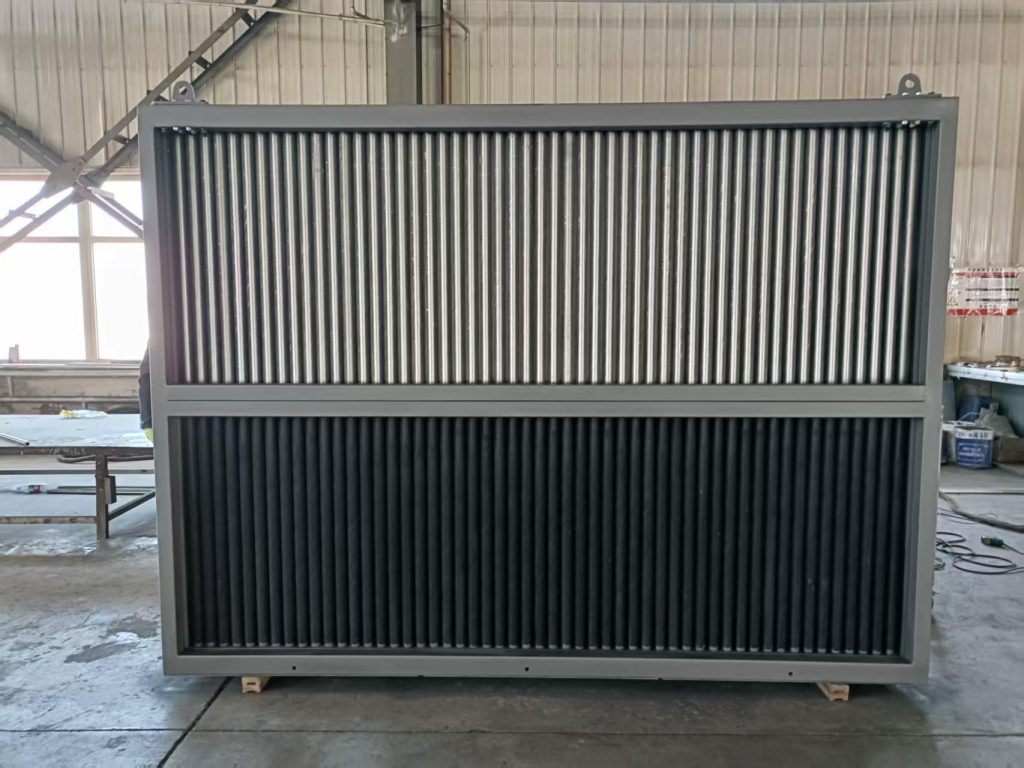
Why Energy Recovery Matters in Pharmaceutical Fluid Bed Drying
Fluid bed drying moves large volumes of heated air through a product bed continuously, making it effective for granule and pellet drying and also one of the more energy-intensive steps in solid dosage manufacturing.
The exhaust air leaves at typically around 40°C to 60°C, still carrying substantial heat, while fresh supply air drawn in from outside must be heated from ambient conditions using steam coils or electric heaters running through every batch. These two streams, one hot and wasted, one cold and costly to heat, run simultaneously without any energy exchange in most traditional setups.
Fluid bed drying is also particularly suitable for heat recovery because of the high and constant exhaust volumes compared with many batch processes where airflow conditions fluctuate more significantly. In a fluid bed dryer, the flow rates are steady and predictable. This means the heat exchanger can be configured accordingly and can perform consistently from batch to batch.
The following is a summary of the major energy losses in a typical pharmaceutical fluid bed dryer system and how the heat pipe heat exchanger solves each one:
| Energy Loss Source | Typical Impact | Heat Pipe Solution |
| Exhaust air | High heat loss through direct discharge | Recover waste heat to preheat fresh supply air |
| Fresh air heating | Higher steam or electric heating demand | Reduce heating load by pre-warming incoming air |
| Temperature fluctuations | Less stable drying conditions between batches | Improve inlet air temperature consistency |
How Does a Heat Pipe Heat Exchanger Work in a Fluid Bed Dryer?
The Basic Heat Transfer Principle
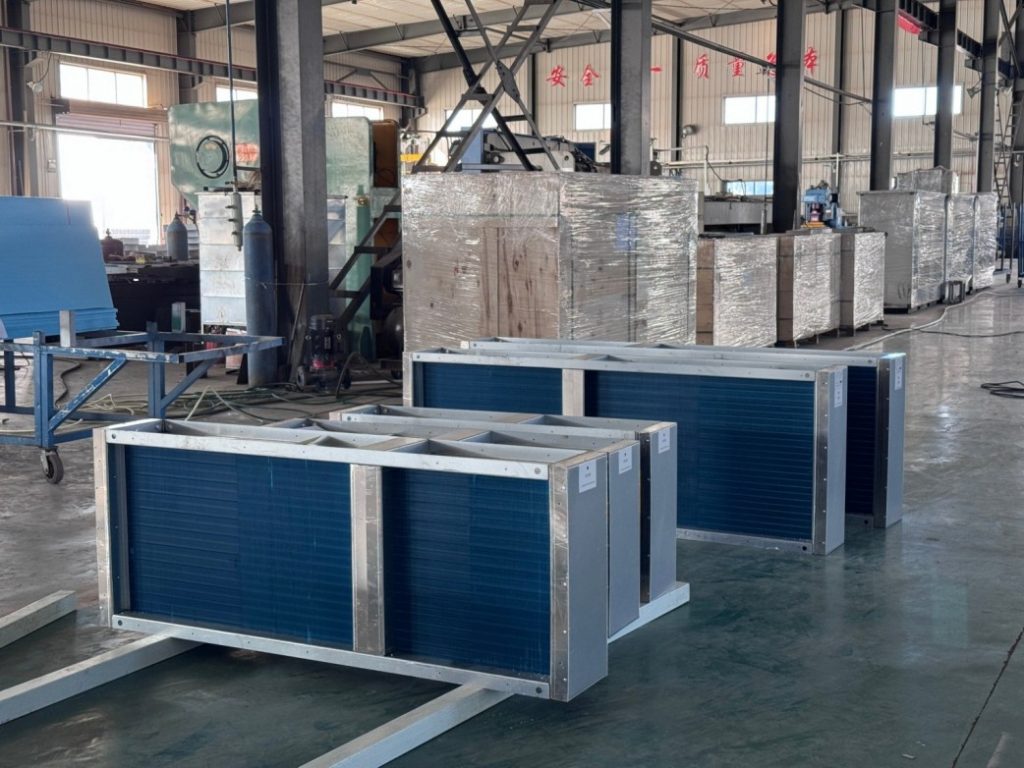
A heat pipe is a sealed tube partially filled with a working liquid. One end is placed on a heat source, causing the liquid to boil and absorb heat. The vapour then moves to the colder end, where it cools and releases heat, then flows back to continue the cycle. This all occurs with no pumps or external electricity.
A heat pipe heat exchanger consists of multiple heat pipes arranged into an evaporator section and a condenser section. One side contains hot exhaust, the other fresh supply air. A sealed partition is always a physical separator of the two airstreams.
Where the Heat Pipe Fits into the Drying System
The heat pipe heat exchanger is commonly installed within or adjacent to the air handling unit. The exhaust air passes through the evaporator portion, where it releases heat to the working fluid. Fresh supply air flows through the opposite side into the condenser section, where it absorbs that recovered heat, before reaching the primary heating coil.
This leads to supply air that is partly preheated (usually 10°C to 25°C) in relation to the main heater load without active energy input.
Typical Installation in Pharmaceutical Fluid Bed Dryers
Installation methods are dictated by the facility layout and if you are retrofitting existing equipment or specifying for a new installation:
- Inline AHU integration: The heat exchanger is incorporated into the air handling section, before the heating coil. This is the most typical retrofit configuration and fits into existing ductwork with minimal modification.
- Dedicated heat recovery unit: A standalone unit placed in the ductwork between the exhaust outlet and fresh air inlet. This suits systems where modifying the AHU directly is not practical.
- Shared heat pipe heat exchanger banks: Larger pharmaceutical facilities running several fluid bed dryers on a common air handling system can use appropriately sized heat pipe heat exchanger banks to serve multiple units from a single heat recovery installation.
The separation of exhaust and supply airstreams is inherent in all arrangements. The sealed design prevents direct air mixing between the two airstreams, making it suitable for GMP-regulated pharmaceutical environments.
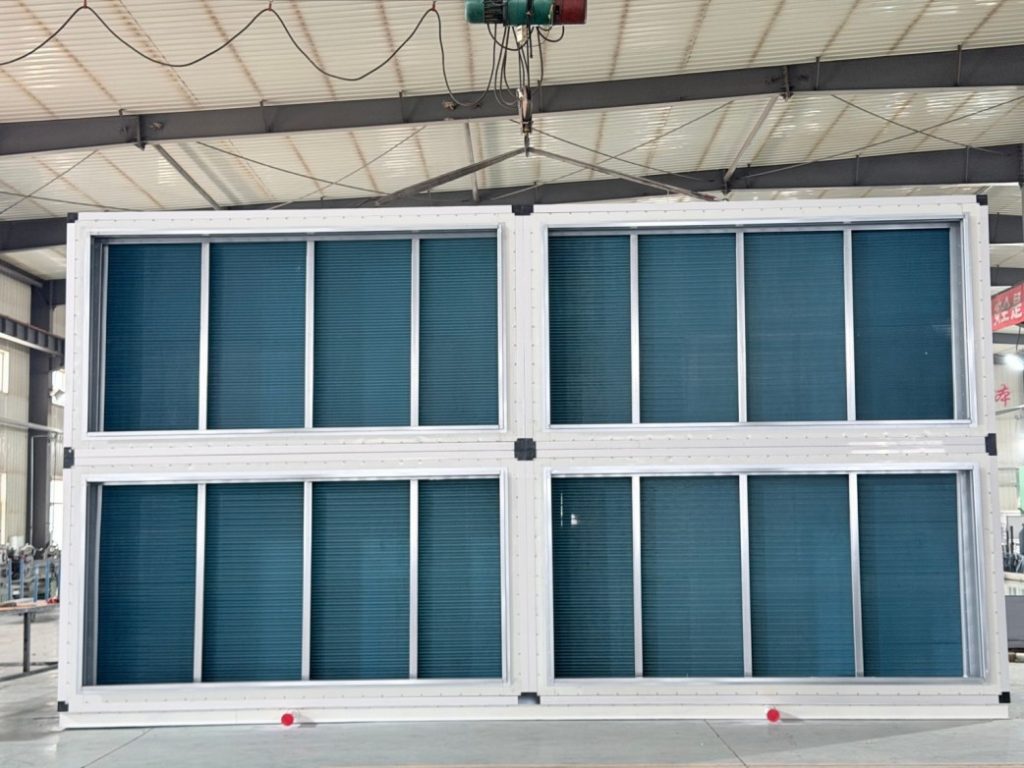
Practical Benefits of Using Heat Pipe Heat Exchangers for Pharmaceutical Drying
The case for heat recovery in pharmaceutical fluid bed drying comes down to several concrete advantages:
1. Lower heating energy consumption
Pre-warming the supply air minimizes the load on steam coils, electric heaters, or hot water systems. Typically, energy savings for fresh air heating range from 20 to 50% depending on the operating conditions.
2. More consistent drying conditions
The incoming air is preheated before the primary heater, thus minimising temperature variations at the dryer input. This improves the repeatability of the drying performance from batch to batch, which is important for product quality and process validation.
3. No direct air mixing
The passive, sealed design keeps exhaust and supply air completely separate, with no moving parts connecting the two streams. This meets GMP and cleanroom requirements without additional control measures.
4. Minimal maintenance requirements
With no fans, motors, or active components, heat pipe heat exchangers require very little ongoing maintenance compared to rotary heat wheel or glycol run-around systems. This reduces both downtime risk and maintenance cost over the equipment life.
5. Favorable payback period
For facilities running continuous or multi-shift operations, the energy savings accumulate quickly. Payback periods of around two to four years are achievable in many applications, depending on operating hours and local energy costs.
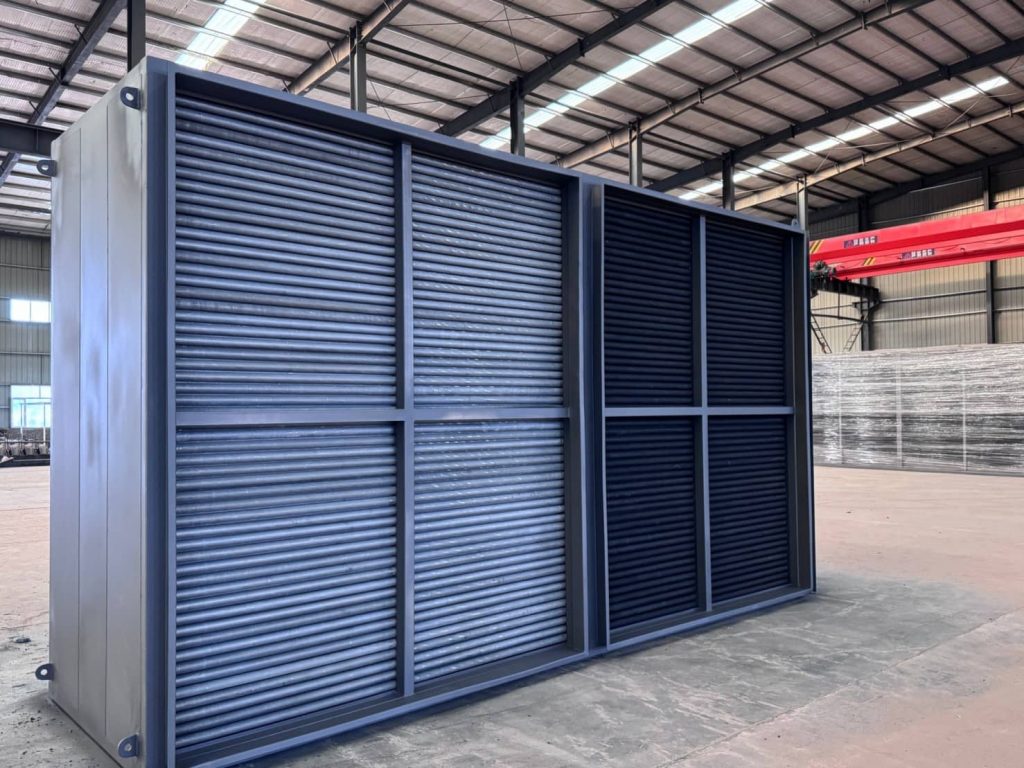
What to Look for When Choosing a Heat Pipe Heat Exchanger
Not every heat pipe heat exchanger is designed with pharmaceutical processing in mind. A few things are worth checking before selecting a unit:
- Material selection: Fin and tube materials should handle the moisture and fine particle content of pharmaceutical exhaust air. Stainless steel fins or coated aluminum are common choices. Material certifications matter in regulated environments.
- Cleanability: Exhaust air from a fluid bed dryer carries fine powder that can accumulate on fin surfaces over time. The heat exchanger should be designed with accessible fin banks that can be cleaned without full disassembly.
- Documented thermal performance: A supplier should be able to provide performance data based on your actual exhaust volume, temperature, and airflow conditions, not just generic specifications. Depending on system design and operating conditions, thermal efficiency ratings of 50% to 70% are reasonable targets for well-matched designs.
- GMP compliance documentation: In pharmaceutical settings, material traceability, surface finish documentation, and references from comparable installations carry real weight in supplier evaluation and equipment qualification.
- Custom sizing capability: Standard catalog units rarely match the duct geometry and airflow conditions of a specific pharmaceutical dryer installation. A supplier who will size and configure the unit to your actual system parameters will deliver meaningfully better results than one offering only off-the-shelf configurations.
Turning Waste Heat Into a More Efficient Drying Process
Pharmaceutical fluid bed drying will always be an energy-intensive process. What changes with heat recovery is how much of that energy delivers value beyond a single use. The exhaust air that is just vented becomes a resource to minimize heating demand, to stabilize inlet conditions and to reduce operating expenses each batch.
For pharmaceutical drying, heat pipe heat exchangers are a practical, kind of proven solution for places trying to cut energy usage, boost process consistency, or meet internal sustainability requirements. If you’re looking at heat recovery options for a fluid bed dryer system, contact the DTDX team to talk through an arrangement tuned to your particular conditions.