

Every summer, commercial HVAC systems face the same structural problem: outdoor air at 35°C or higher is drawn into the air handling unit, while conditioned exhaust air at around 24°C gets discharged straight outside. The chiller works hard to bridge that gap, and electricity bills climb in proportion.
The question most facility managers and HVAC engineers wind up asking is: Can that cooled exhaust air be used before it’s gone? The answer is yes. This can be done using heat pipe heat recovery.
This guide covers how heat pipes function in summer cooling mode, what kind of cooling energy savings are realistic, which building types benefit most, and what to check before specifying a system.
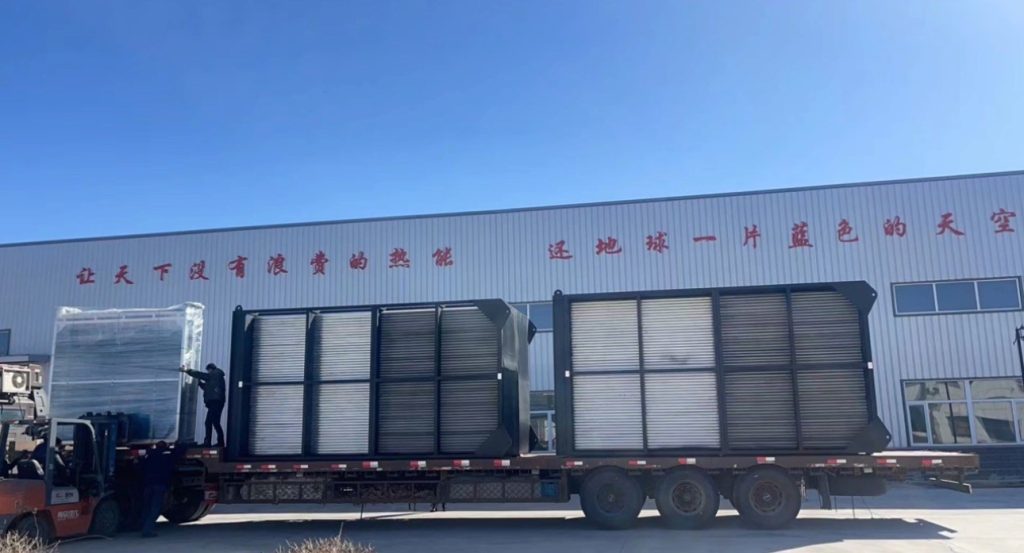
The Summer Fresh Air Dilemma: Why Chillers Work Overtime
On hot days you can’t just turn off the ventilation. ASHRAE Standard 62.1 and other standards provide minimum outdoor air supply rates for commercial and institutional buildings so that acceptable indoor air quality can be assured.
That obligation generates a continuous thermal mismatch: hot fresh air must be cooled to supply temperature before entering inhabited spaces, while cooled exhaust air exits through the return side of the same unit.
Without any recovery mechanism in place, the chiller carries the full thermal load of that fresh air stream. On a peak summer day, fresh air conditioning alone can account for 30-40% of a commercial building’s total cooling energy consumption. That is not a small rounding error, and for buildings running large air handling units around the clock, it adds up to real money.
HVAC heat recovery addresses exactly this gap by using the building’s own exhaust to pre-treat incoming air before it ever reaches the cooling coil.
Do Heat Pipes Work in Summer? Understanding Cool Recovery
This is the most common question we hear from engineers who know heat pipe systems from winter heating applications. The answer is straightforward: yes, heat pipes work just as well in summer, and the physics is the same.
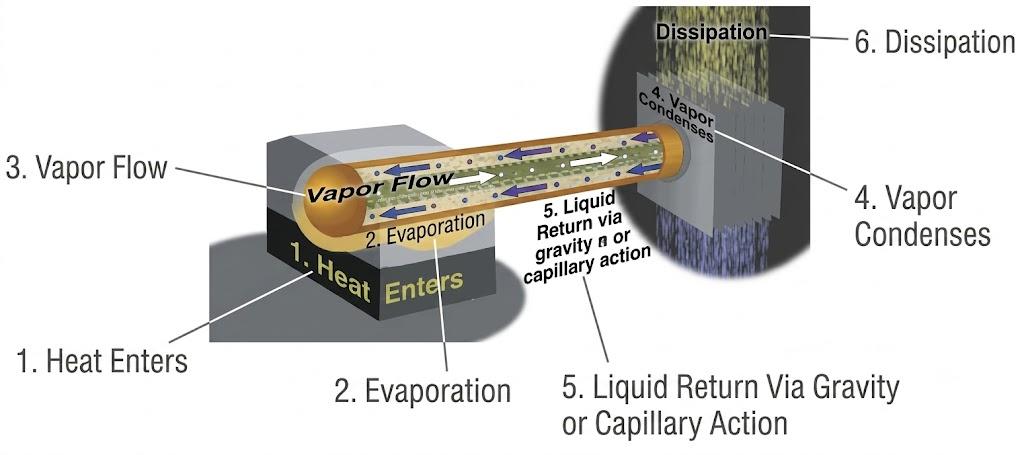
A heat pipe is a sealed tube containing a small amount of working fluid that undergoes phase change to transfer heat passively. There are no moving parts and no electrical input. The only thing required is a temperature difference between the two air streams.
- Driven by physics: Heat always goes to the cold medium. The entering outdoor air is warm (~35°C) in the summer and the indoor exhaust air is cool (~24-26°C). The exhaust side is the heat sink. The orientation is reversed from that in winter, but the mechanism is the same.
- Phase-change mechanism: Working fluid evaporates in the warm fresh air stream, moves as vapour to the cooler exhaust air stream where it condenses and produces heat, then returns as liquid to continue the cycle.
- Zero operating energy: The entire transfer process is passive. Running a heat pipe cool recovery module adds nothing to the electricity bill.
Quantifying Performance: Cooling Energy Savings and ROI
The performance characteristics of heat pipe HVAC energy recovery in summer are well-established across commercial installations. Standard heat pipe systems typically achieve 50–65% sensible heat recovery efficiency, depending on airflow balance, face velocity, and operating conditions.
For example, in practical terms, entering outdoor air at 35°C can often be pre-cooled to around 27–28°C, before reaching the cooling coil, reducing the cooling load on the chiller.
Here is how that translates into system-level impact:
| Parameter | Standard HVAC (No Heat Recovery) | HVAC with Heat Pipe Cool Recovery | Realized Benefit |
| Incoming Air Temp to Cooling Coil | 35.0°C (Hot Outdoor Air) | ~27.5°C (Pre-cooled by Exhaust) | 7.5°C pre-cooling drop |
| Outdoor Air Cooling Load | 100% Full Peak Load | ~65–70% Peak Load | Up to 30% OA cooling load reduction |
| Power Consumption | Full chiller running at peak | Significantly reduced | Measurable cooling energy savings |
| System Operating Cost | Baseline standard | Lower overhead | Typical payback: 1–3 years |
*Actual energy savings, recovery efficiency, and payback period depend on ventilation rate, climate, operating hours, and system design.
In addition to immediate energy savings, decreased peak load reduces wear and tear on chillers and compressors, lowering maintenance requirements over time. For facilities with 15-20 year equipment lifecycles, this means a lower total cost of ownership for the life of the equipment.
Common Misconceptions About Heat Pipe Operation
A few objections come up regularly when heat pipe cool recovery is proposed. They are worth addressing directly.
Myth 1: Heat pipes only work for winter heating.
Reality: Thermodynamics does not distinguish seasons. The physics is the same in July as it is in January; only the direction of heat flow changes. If the exhaust air is colder than the incoming fresh air, the system works.
Myth 2: Heat pipes need to be mounted at steep vertical angles.
Reality: Depending on the heat pipe design, modern systems can operate efficiently even at low installation angles. This matters significantly for retrofit projects where existing duct layouts are fixed.
Myth 3: Adding heat recovery raises fan static pressure too much.
Reality: Low-resistance fin geometries keep air pressure drop well within the range of standard supply fans, typically under 100–150 Pa. Most existing systems can accommodate this without a fan upgrade.
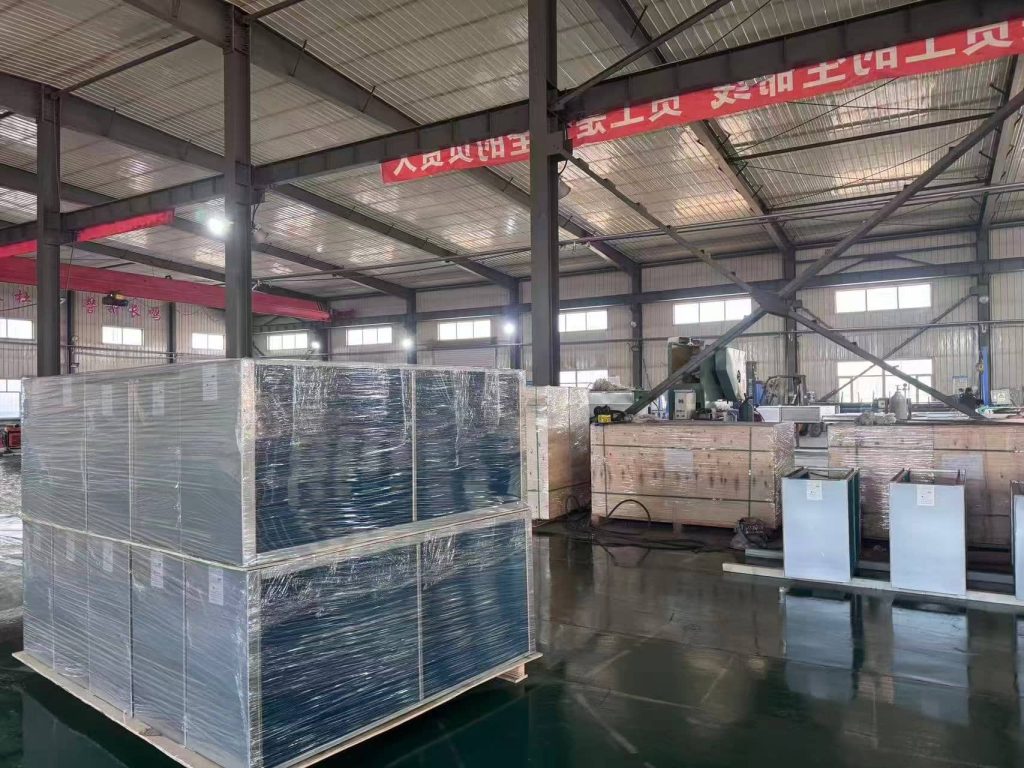
Applications for Summer Energy Recovery
Heat pipe HVAC energy recovery performs across a wide range of building types. From our project experience, the applications with the strongest and most consistent returns are:
- Data centers and IDCs: Continuous high cooling loads mean the recovery module runs around the clock, maximizing annual energy savings. Heat pipe recovery can complement economizer or free-cooling strategies during shoulder seasons.
- Hospitals and laboratories: 100% fresh air requirements with no recirculation produce a steady, predictable exhaust stream. Recovery rates are high and sizing is straightforward. This is one of the application areas where we see the clearest return on investment.
- Commercial buildings: Hotels, shopping malls, and office towers with large AHUs benefit from meaningful summer peak demand reductions, which also help manage utility demand charges.
- Industrial plants: Industrial facilities with high ventilation requirements or large process heat loads can use air-to-air energy recovery to reduce ambient cooling costs in production areas.
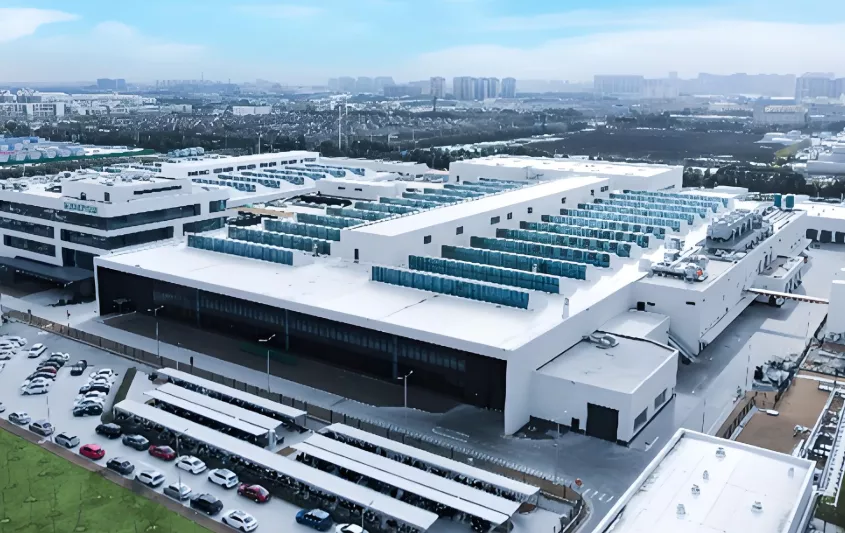
Upgrading Your HVAC Efficiency for Peak Summer Performance
Integrating a heat pipe recovery module into an existing or new air handling system is generally more straightforward than it appears, but a few parameters need to be confirmed before specifying.
- Evaluate airflow rates: Cool recovery works best when fresh air intake and exhaust volumes are reasonably balanced. Significant imbalances reduce effective recovery efficiency, so it is worth reviewing the AHU design before sizing the module.
- Check spatial dimensions: Modular heat pipe recovery units fit into existing ductwork or new AHU builds without substantially altering the overall system footprint. Most installations require no structural changes.
- Partner with experienced engineers: Thermal performance in the field depends on matching the module to actual site airflow rates, outdoor design temperatures, and exhaust conditions. Working with engineers who have hands-on project experience avoids the gap between specification assumptions and real-world results.
Beat the Heat with Smart Energy Recovery
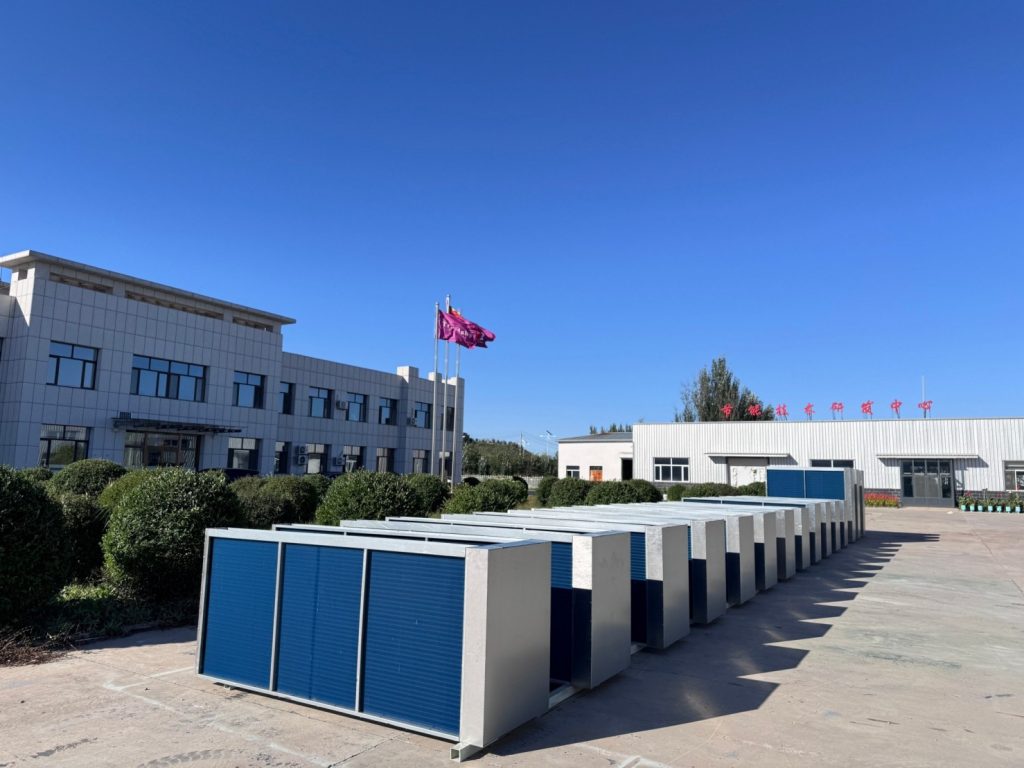
The logic behind heat pipe cool recovery is simple: your building exhausts cold air all summer. With the right heat pipe heat recovery system in place, a meaningful portion of that cooling capacity serves the building instead of going to waste.
Pre-cooled supply air means less work for the chiller, lower electricity consumption, and equipment that holds up better across its operating life. The payback timeline is short, and the passive nature of the technology means there is very little that can go wrong mechanically over the long run.
DTDX engineers and manufactures heat pipe energy recovery systems, with over 10,000 units delivered to hospitals, data centers, laboratories, and commercial buildings across more than 20 industries. If you are evaluating HVAC heat recovery for a summer cooling application, our team can provide a free heat/cooling recovery potential assessment within 24 hours. Contact us to start the conversation.