

It may seem like a small feature on a drawing, but the fin pitch usually decides whether a heat pipe heat exchanger will function well or continue to cause trouble. Set the fins too close together and dust will build up quickly while the fan works harder. Space them too far apart and you lose usable heat transfer space.
This guide discusses what fin pitch is, how it impacts the heat transfer and airflow, and how to select a practical number for your individual operating conditions.
What Do Fin Pitch and Fin Spacing Mean
They are simple to confuse yet describe separate things:
- Fin pitch: The distance between the center of one fin to the center of the next, sometimes expressed in millimeters or in fins per inch.
- Fin spacing: The distance between two adjacent fins. It is equal to the pitch less the fin thickness.
The space is what really controls the air flow, as only air and dust can pass through the gap. For very thin fins, the two values are close. The difference becomes more noticeable with thicker fins.
Fins increase surface area and the amount of fins and pitch are some of the things engineers tweak to get the optimum performance.
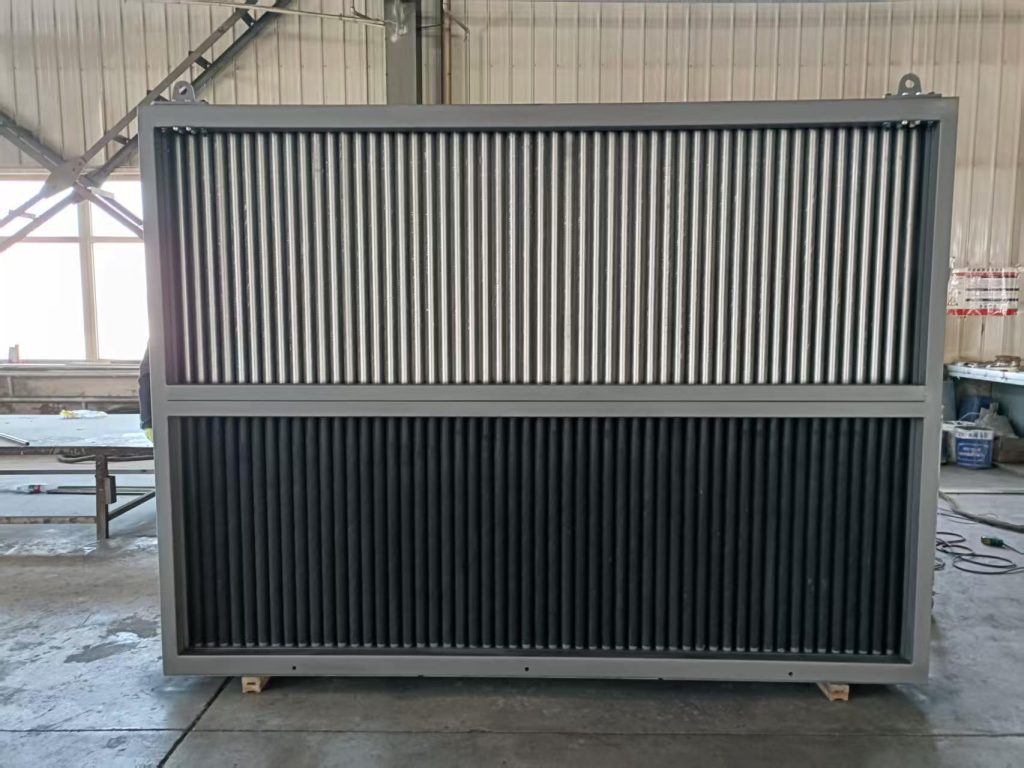
Why a Smaller Fin Pitch Isn’t Always Better
It is tempting to think that more fins always means better performance. The effect of fin pitch on heat transfer is a trade-off.
Closer fin pitch. More fins in the same space means greater surface area for the heat to go through. The resistance of the airflow increases, the fan power consumption increases, and dust can cross the gaps.
Wider fin pitch. Air flows more freely and the fins are simpler to clean. Cost is less surface area, thus you may require a bigger core for the same duty.
Here is a quick side-by-side view of the general trends:
| Comparison | Tighter Fin Pitch | Wider Fin Pitch |
| Heat transfer surface area per unit volume | Higher | Lower |
| Airflow resistance | Generally higher | Generally lower |
| Fouling risk | Higher in dusty conditions | Generally lower |
| Cleaning and maintenance | More demanding | Easier |
| Suitable conditions | Relatively clean airflow with limited space | Dusty airflow or higher airflow resistance constraints |
This table indicates broad trends and not hard and fast laws. The result depends on the fin shape, the air velocity and the overall construction of the exchanger.
Choosing Fin Pitch for Different Operating Conditions
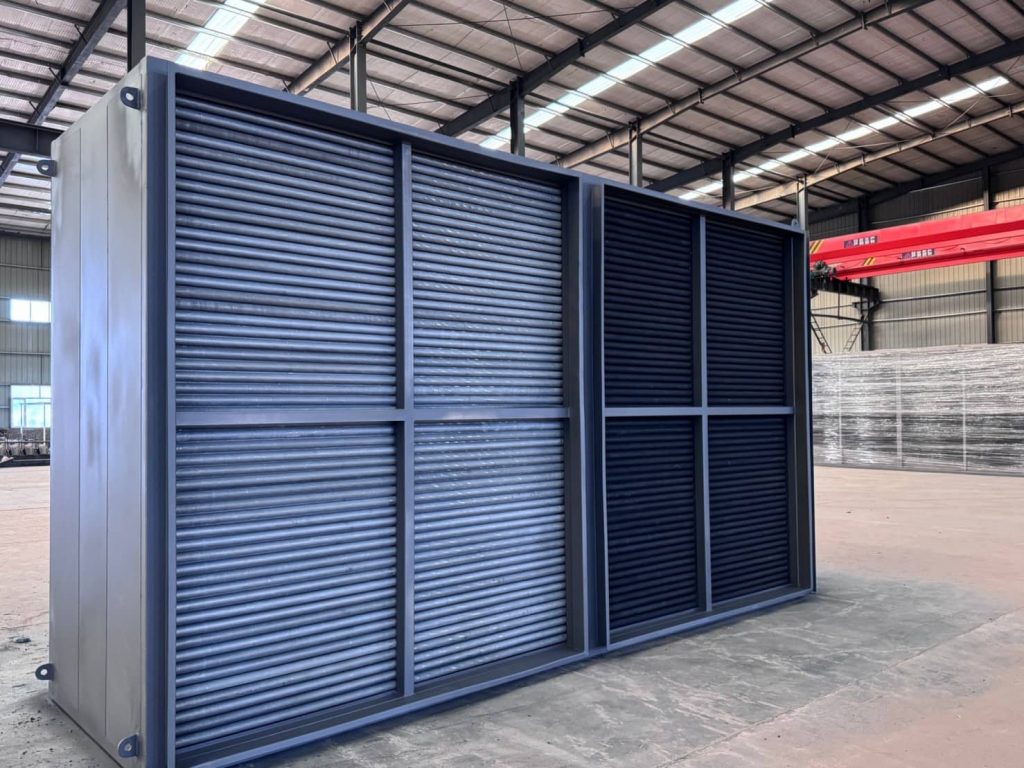
Airflow and Allowable Pressure Drop
Start with the fan. The tighter pitch may be worth the extra resistance if the system has plenty of fan capacity. A larger pitch will keep air flowing if the fan is running near its capacity or if the duct system is extremely restrictive. A compact core that starves for air is usually harder to live with than a little larger core with broader fin spacing.
Dust and Cleaning Requirements
Dust is often overlooked. Flue gasses, workshop exhausts and dryer exhaust streams may contain dust particles.
- Light dust: A light pitch will, in most cases, be taken care of by filters or routine cleaning.
- Heavy or sticky dust: Go broader so that gaps are open longer and can be reached by cleaning instruments.
- Hard-to-access units: Choose a pitch that will tolerate some buildup between cleanings.
Typically, HVAC applications employ fin spacing between 1.8 and 2.3 mm, whereas industrial applications need larger spacing between 2.5 and 3.2 mm. For dustier applications, even wider spacing may be necessary, depending on dust load and cleaning needs. These are for reference only and must be checked against your own conditions.
Condensation, Frost, and Drainage
The fin temperature is one of the conditions for air to condense on it. As water collects, it starts to fill the gaps between the fins and eventually stops airflow through the coil. When the temperature gets very cold, water on the fins starts to freeze. As it freezes, the ice builds up, quickly plugging small holes. As the space between fins increases, it becomes easier for water and ice to drain from the coils and helps to slow the block of airflow. It is also important to design the coil and fin so that water will drain away from the coils as quickly as possible.
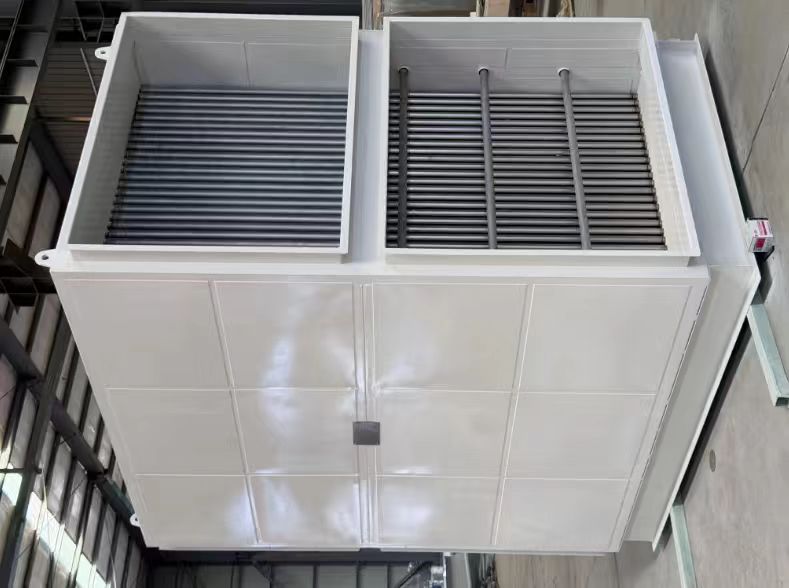
Comparing Fin Pitch Options Before Making a Choice
It helps to go through a short checklist rather than guessing:
- Start with the operating conditions: Note the temperature, humidity, dust level and the likelihood for condensation or frost in the air.
- Check the performance requirements: Check heat recovery objective, available fan pressure and accessible space for core.
- Compare different fin pitch options: Compare heat transfer, pressure drop and estimated cleaning interval side by side for two or three pitch values.
- Consider materials and construction: Fin thickness, fin shape and material (aluminum, copper or coated steel) all impact the performance of a given pitch over time.
The best choice is not always the tightest fin pitch. It’s the one that balances heat transfer, airflow resistance and cleaning effort for your site. A little more thought at the design stage might save a lot of maintenance later on.
At DTDX, we have worked on heat pipe heat exchangers for many kinds of airflow conditions. If you are unsure which fin pitch suits your project, send us your operating details and we will help you compare the options.