

Empowering a New Chapter of Energy Conservation and Efficiency Improvement Across Industries
Guided by the national **dual carbon goals**, industrial waste heat recovery has become a critical approach for enterprises to achieve energy conservation, emission reduction, cost reduction and efficiency enhancement. As a pioneer and expert in medium-and-low-temperature heat pipe technology in China, Beijing Detian Dixing Technology Development Co., Ltd. (hereinafter referred to as “Detian Dixing”) has developed its core product—the **2D Heat Pipe Heat Exchanger**. With outstanding heat transfer performance, flexible scenario adaptability and remarkable energy-saving benefits, it has been successfully applied in various energy-intensive industries including chemicals, pharmaceuticals, food and coating. It has earned a reputation as a veritable “gold miner” in the industrial waste heat sector, injecting strong impetus into the green transformation of enterprises.
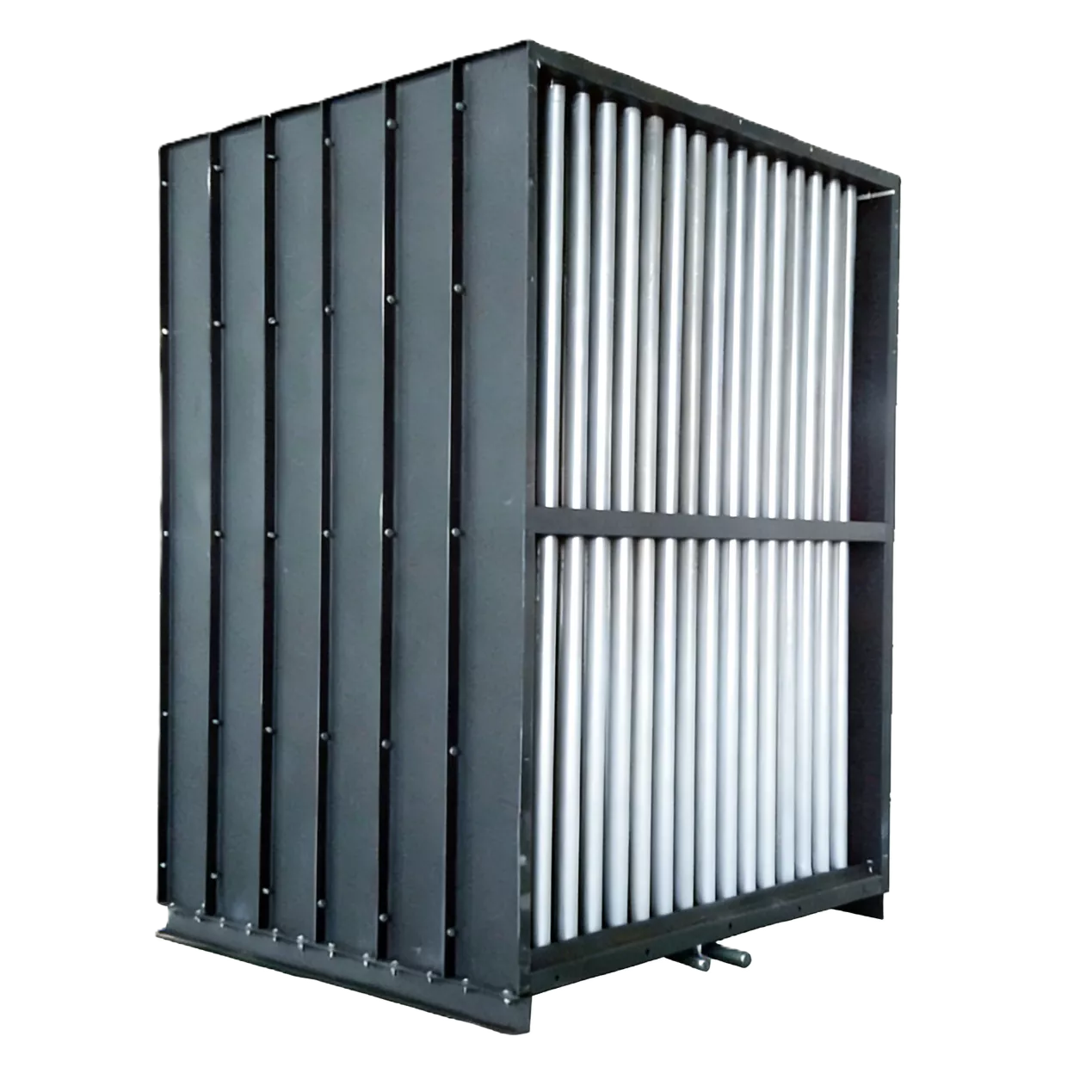
Technical Core: The Green Engine for High-Efficiency Heat Transfer
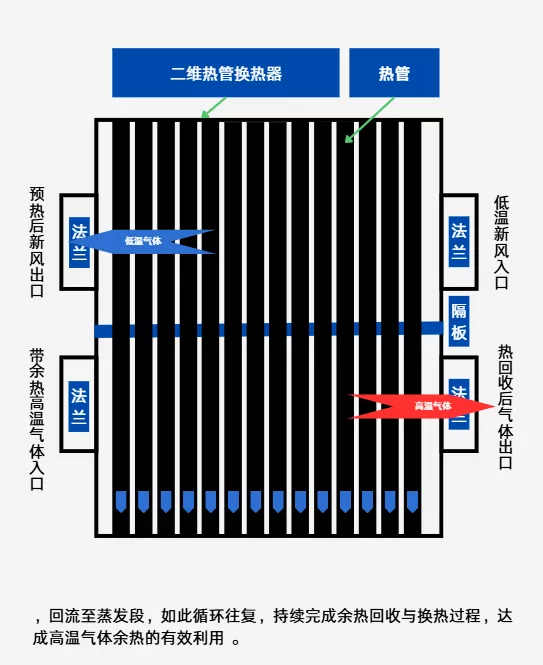
The powerful performance of Detian Dixing’s 2D Heat Pipe Heat Exchanger stems from its in-depth understanding and innovative application of heat pipe technology. The core of the equipment lies in the sealed vacuum heat pipes inside, filled with specially formulated eco-friendly working fluids. Its operating principle is based on **phase-change heat transfer**, a highly efficient heat transfer method:
1. **Evaporation and Heat Absorption**: When high-temperature industrial waste heat fluids (flue gas, wastewater, steam, etc.) flow through the evaporation section of the heat pipe, the internal working fluid quickly absorbs heat and vaporizes into steam. This process completes efficiently with an extremely small temperature difference (even 1–2°C), demonstrating far superior thermal conductivity than traditional metals.
2. **Vapor Transmission**: The vaporized steam flows rapidly to the condensation section of the heat pipe at a speed close to the speed of sound, driven by a tiny pressure difference.
3. **Condensation and Heat Release**: In the condensation section, the steam exchanges heat with low-temperature fluids (fresh air, process water, feed oil, etc.) to be heated, releases a large amount of latent heat and condenses back into liquid.
4. **Reflux and Circulation**: The condensed liquid flows back to the evaporation section by gravity or capillary force, completing a full heat transfer cycle.
This process runs continuously **without any external power**, realizing efficient, one-way and zero-power heat transfer. Through optimized design of the heat pipe structure (e.g., high-efficiency fins to expand heat exchange area) and precise matching of working fluids, Detian Dixing has achieved a heat recovery efficiency of 60%–85% for its 2D Heat Pipe Heat Exchanger (even higher under some working conditions), maximizing the conversion of wasted waste heat into usable energy.
Core Advantages: Tailor-Made for Industrial Energy Conservation
Compared with traditional partition-type heat exchangers, Detian Dixing’s 2D Heat Pipe Heat Exchanger presents unparalleled comprehensive advantages in industrial waste heat recovery scenarios:
1. **High Efficiency and Energy Saving, Significant Returns**: With ultra-high heat recovery efficiency, it directly uses recovered heat to preheat combustion air, heat process media or supply domestic hot water, drastically reducing enterprises’ consumption of primary energy such as natural gas and electricity. According to application cases in various industries, the **payback period** is usually only 6 months to 2 years, with considerable economic benefits.
2. **Safe Structure, Reliable Operation**: Adopting a unique separate structure, the cold and hot fluid channels are completely isolated. Even if a single heat pipe fails, the two fluids will not mix, fundamentally eliminating the risk of cross-contamination and safety accidents—especially suitable for industries with strict safety requirements such as chemicals and metallurgy.
3. **Corrosion and Fouling Resistance, Long Service Life**: Materials such as carbon steel, stainless steel and titanium alloy can be selected according to different working conditions, and the heat pipe surface is treated with special anti-corrosion coating, effectively resisting acid dew point corrosion and dust fouling in flue gas. The equipment has no moving parts and minimal wear; routine maintenance only requires regular dust cleaning, with a designed service life of over 10–15 years.
4. **Flexible Adaptation, Easy Installation**: Featuring a modular design, it can be flexibly assembled into equipment of different sizes and heat exchange areas based on users’ actual space and working condition needs. For energy-saving renovation of existing equipment, no large-scale modification of the original system is needed, with a short installation cycle and minimal impact on production.
In-Depth Industry Deployment: Successful Practices in Multiple Scenarios
With wide applicability, Detian Dixing’s 2D Heat Pipe Heat Exchanger has been successfully applied in key process links of multiple industries, creating significant economic and environmental benefits.
Chemical Industry: Waste Heat Recovery for Reactors and Drying Systems
In chemical production, jacket cooling water of reactors, overhead steam of rectification towers and waste gas from various drying equipment (fluidized beds, spray dryers, etc.) contain massive waste heat. A large polyacrylamide manufacturer directly discharged 200°C production waste gas from its synthesis workshop before. After adopting Detian Dixing’s 2D Heat Pipe Heat Exchanger, the waste gas temperature was reduced to 120°C, and all recovered heat was used to preheat production feed, replacing the original natural gas heating load. Calculations show the project saves about **800,000 RMB** in fuel costs annually while effectively reducing carbon emissions.
Pharmaceutical Industry: Energy Recycling in Drying and Sterilization
GMP workshops in the pharmaceutical industry have extremely high requirements for the environment and energy efficiency. A biopharmaceutical factory applied Detian Dixing’s 4D Heat Pipe Heat Exchanger (an upgrade of 2D technology) in the renovation of its glucose fluidized bed drying line, recovering waste heat from 80–150°C high-temperature waste gas generated during drying to preheat fresh air. After renovation, the heat recovery efficiency reached 65%, saving **1.8 million RMB** in electricity costs annually with a payback period of only 11 months, while improving the drying efficiency and quality of products.
Food and Coating Industries: Comprehensive Energy Savings from Drying to Heating
In food processing, processes such as grain drying and can sterilization produce a large amount of medium-and-low-temperature waste heat. A food processing plant used a 2D Heat Pipe Heat Exchanger to recover waste heat from 85°C waste gas of sterilization kettles to preheat raw milk, shortening the heating time per batch of raw milk from 40 minutes to 25 minutes, increasing daily production capacity by 30% and adding about **800,000 RMB** in annual output value. In the coating industry, Detian Dixing’s heat pipe heat exchangers are widely used for waste heat recovery from drying furnace waste gas to preheat combustion air, reducing drying furnace fuel consumption by 15%–20% and cutting harmful gas emissions.
Energy and Power Industry: In-Depth Waste Heat Utilization for Boiler Flue Gas
In coal-fired or gas-fired boiler systems, the exhaust gas temperature is usually 120–180°C, holding huge waste heat potential. Detian Dixing’s 2D Heat Pipe Heat Exchanger can be installed after the air preheater and before the dust collector, further reducing the exhaust gas temperature to below 90°C, and the recovered heat is used to heat boiler feed water or preheat air. After application in a thermal power plant, the system heat consumption decreased by 12%, saving about **1.2 million kWh** of electricity annually and reducing CO₂ emissions by over 1,000 tons, achieving remarkable energy-saving and environmental benefits.
Value and Outlook: Leading the New Trend of Industrial Energy Conservation
The application of Detian Dixing’s 2D Heat Pipe Heat Exchanger not only brings tangible cost savings and efficiency improvements for enterprises, but also plays a vital role in promoting the green and low-carbon development of the industrial sector. It converts previously neglected “waste heat” into valuable energy, serving as a key technical tool for enterprises to fulfill social responsibilities and respond to the national dual carbon strategy.
With the continuous improvement of industrial energy efficiency standards and the booming energy-saving renovation market, Detian Dixing will continue to commit to technological innovation and product upgrading based on its profound accumulation in heat pipe technology and extensive industry experience, providing customized waste heat recovery solutions for more industries. In the future, Detian Dixing’s 2D Heat Pipe Heat Exchanger will surely shine brighter on the broader industrial stage, helping China’s industry move toward a more efficient, cleaner and sustainable future.