

If you operate an industrial dryer, whether for grain, food, chemicals, or sludge, a significant portion of the energy you pay for is being pushed out through the exhaust stack every single hour. That hot air still contains significant thermal value, and in most plants it simply evaporates into the atmosphere.
Dryer exhaust is often a practical starting point for waste heat recovery because it usually provides a continuous source of recoverable heat. The heat is continuous, the temperatures are predictable, and the volumes are large enough to make recovery genuinely worthwhile.
This guide covers where dryers actually lose energy, how a heat pipe heat exchanger fits into the picture, what recovery configurations are available, and what real-world results look like after a retrofit.
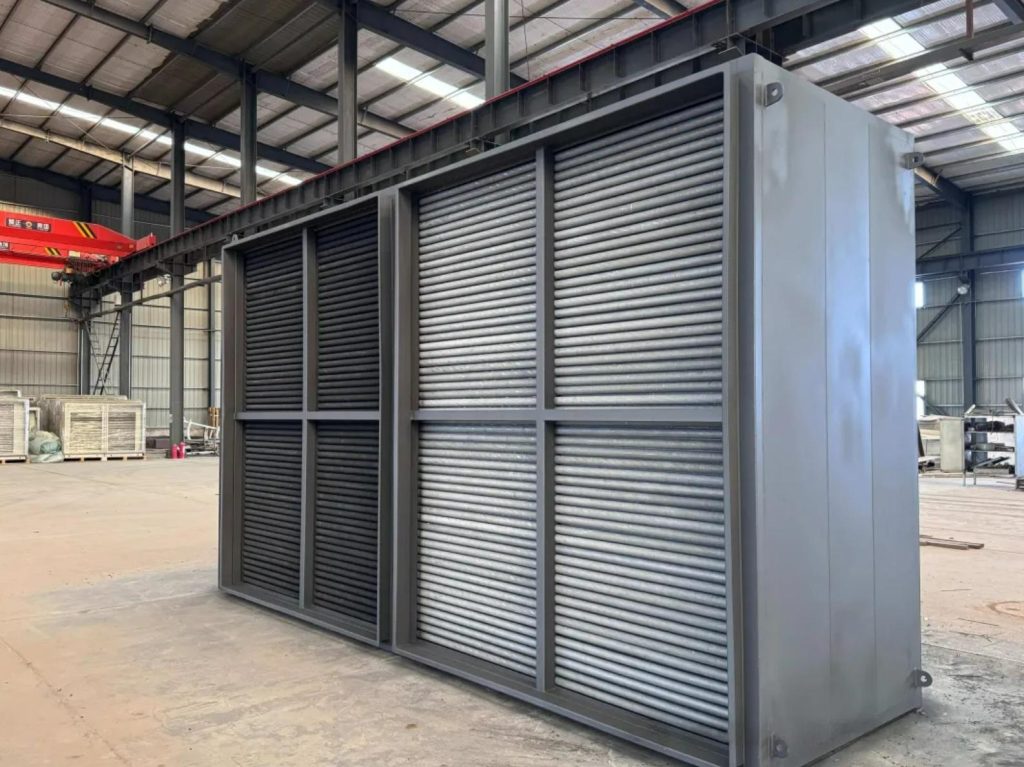
Where Industrial Dryers Commonly Lose Energy
Industrial drying is one of the largest energy-consuming processes in the manufacturing industry. Drying needs a constant flow of hot air through the drying chamber to transport away moisture. When air leaves the dryer it still has a considerable portion of the heat that was put into it.
The exhaust fan of a medium-sized industrial dryer may exhaust more than 2,000 m³ per hour. In one full year of operation, the accumulated heat loss can easily reach hundreds of thousands of yuan in wasted fuel expenditures.
The table below shows typical exhaust temperatures and energy utilization ranges for common industrial dryer types. In many conventional drying systems, a large share of the energy input leaves with the exhaust air or is lost elsewhere in the process. This is where the opportunity for industrial waste heat recovery begins.
| Drying Application | Exhaust Temperature | Typical Energy Utilization Range |
| Grain Dryers | 80-120°C | 35%-45% |
| Coating Curing Ovens | 140-180°C | 30%-40% |
| Food Dehydrators | 70-100°C | 40%-50% |
| Chemical Raw Material Dryers | 100-160°C | 35%-45% |
| Sludge Drying | ~80°C | 30%-40% |
This gap in energy utilization is not a minor issue. That lost heat is a major recurring operating cost on a 300-ton-per-day grain dryer that accumulates year after year.
How a Heat Pipe Heat Exchanger Recovers Dryer Exhaust Heat
A heat pipe is a sealed tube that contains a tiny amount of working fluid. One end is heated, the liquid evaporates, the vapour goes to the colder end, condenses, gives up its heat and passively flows back. No pump is required. The whole cycle runs on temperature difference alone.
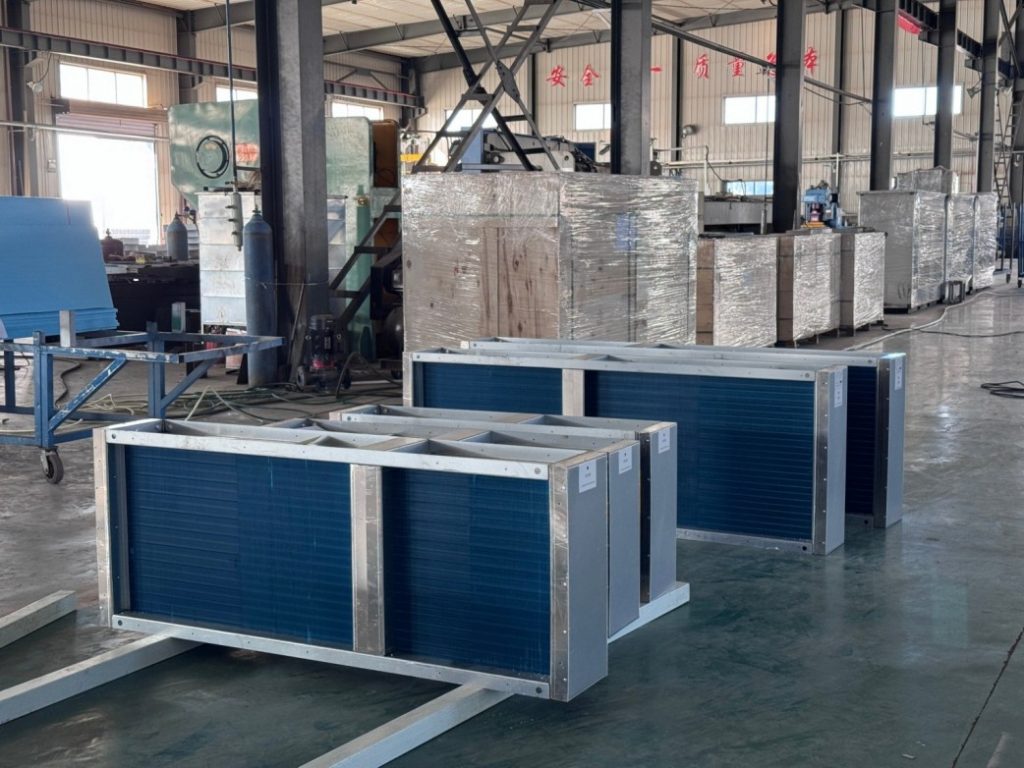
A heat pipe heat exchanger is a bank of these tubes housed in an enclosure that separates the exhaust air from the incoming fresh air.
On one side of the tube bundle flows hot exhaust, on the other fresh air, and heat is transferred via the tube wall, with the two airstreams never mingling. This is a passive and self-driven process.
This kind of exchanger handles the specific demands of dryer exhaust recovery well, and there are a few reasons why.
Why Heat Pipes Can Be a Good Fit for Dryer Exhaust Recovery
- Reduced cross-contamination risk: The exhaust air and incoming air remain physically separated by the heat pipe tube wall, helping reduce cross-contamination risk in applications where air cleanliness is important. This is very important from a hygiene and regulatory point of view for food processing and pharmaceutical drying.
- Handles dusty airstreams: Larger tube diameters (usually 25-38 mm) and a straight flow route can be more tolerant of dust-laden exhaust than some compact plate-type designs, helping reduce the risk of blockage in suitable applications.
- No internal moving parts: Pumps, gears or motors are not within the heat exchanger. With proper material selection, corrosion protection and frequent maintenance, heat pipe heat exchangers can provide lengthy service life, often greater than 10 years in optimal working conditions.
- Corrosion-resistant options: Conventional heat exchangers may be corroded faster by alkaline or acidic components in chemical drying exhaust. Depending on the exhaust composition and the corrosion risk, materials such as ND steel or 316L stainless steel might be utilized.
Four Ways to Use Recovered Heat from Dryer Exhaust
So the question is, after the exhaust heat is captured, how do we put it back to use? The optimal arrangement depends on exhaust temperature, production schedule and what the facility really needs energy for.
1. Preheating fresh intake air (air-to-air)
Typically the easiest to justify financially, this is the most popular setup. Depending on exhaust temperature and system design, incoming air can be preheated significantly before entering the main heater. In suitable applications, it may reach around 100–120°C.
With this setup, heat recovery performance can exceed 60% in suitable applications, and payback durations are usually well below one year.
2. Generating hot water or low-pressure steam (air-to-liquid)
If exhaust temperatures are above 150°C, recovered heat can be transferred to a liquid loop.
For higher temperature exhaust streams a purpose designed device can transmit recovered heat to a water loop. It can be used for hot water production, material preheating, equipment cleaning, or as an auxiliary heat source for low pressure steam jobs.

3. Adapting to batch and intermittent production
Food and specialty chemical dryers often run in cycles rather than continuously, which creates a timing mismatch between heat availability and heat demand.
In these cases, the heat recovery system can be combined with a buffer tank or thermal storage unit to make recovered heat available between production cycles.
4. Corrosive exhaust applications
The exhaust gases from chemical raw materials dryers often contain acidic or alkaline components which attack the conventional heat exchanger materials.
Corrosion resistant materials and protective coatings can assist keep performance up under challenging exhaust circumstances.
What Results Can Dryer Exhaust Heat Recovery Deliver?
Across completed industrial drying retrofit projects, the performance improvements are consistent and meaningful. The table below draws from real installation data across three common scenarios.
| Operational Scenario | Energy Utilization Before Retrofit | Energy Utilization After Retrofit | Annual Energy Savings (CNY) | Payback Period |
| Grain Dryer (300 tons/day) | 45% | 92% | ¥960,000 | 12 Months |
| Food Dryer (Batch Type) | 50% | 88% | ¥720,000 | 14 Months |
| Chemical Dryer (Corrosive Exhaust) | 40% | 93% | ¥1,500,000 | 13 Months |
*The figures shown are project-based operating data. Actual results vary depending on dryer type, exhaust temperature, airflow, operating hours and site conditions.
What is common to all three examples is that the payback period is consistently about 12 to 14 months. After payback, the system can continue to reduce energy costs over its operating life.
In many retrofit projects, the dryer itself can remain largely unchanged while the heat pipe exchanger recovers energy from the exhaust stream.
Making Dryer Heat Recovery Part of a Long-Term Efficiency Plan
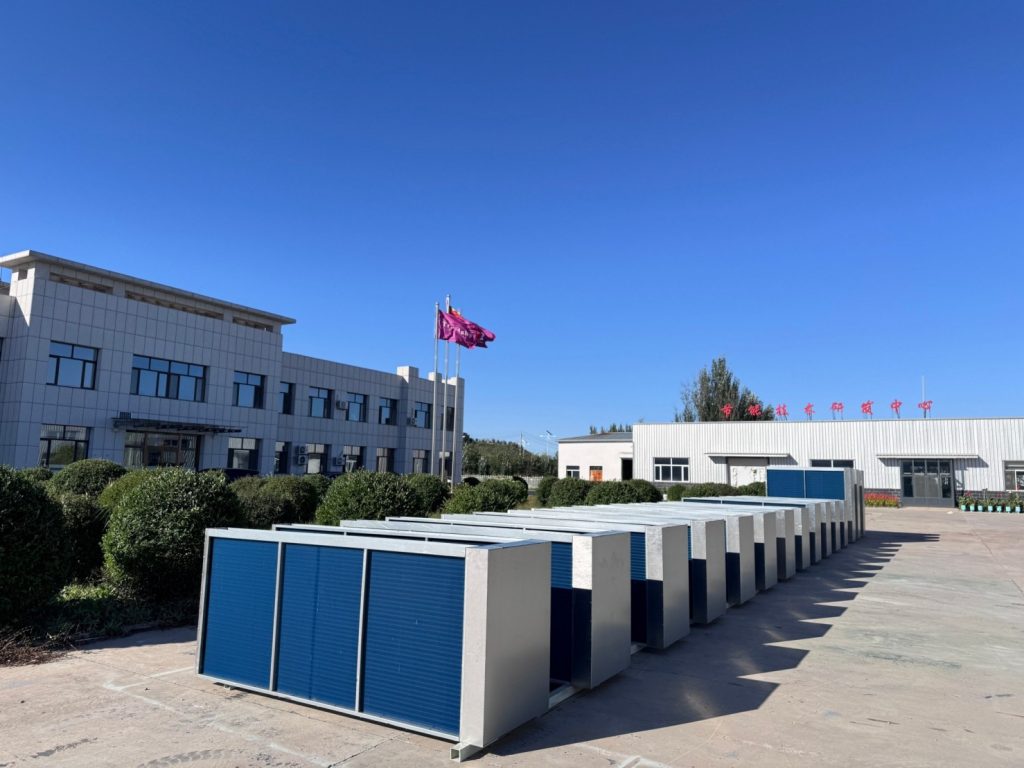
Dryer exhaust heat recovery is not a complicated upgrade, but it does require the right equipment matched to the right application.
The project examples show that heat recovery can improve energy utilization and reduce fuel costs when site conditions are suitable. The first step is to assess exhaust temperature, airflow and operating hours.
DTDX specializes in heat pipe heat exchangers for industrial waste heat recovery and can help you assess whether a dryer exhaust retrofit makes sense for your specific setup. Contact us for a free preliminary heat recovery assessment.