

When defining a heat pipe heat exchanger for a project, one of the first concerns that comes to mind is: how many rows do I really need? It appears simple enough but the answer depends on a number of interdependent variables and an incorrect solution can mean underperforming equipment, wasted energy or too high pressure drop across the system.
This article walks through what “rows” represent in a heat pipe heat exchanger, how the number of rows impacts performance, and what to consider when sizing one for your application.
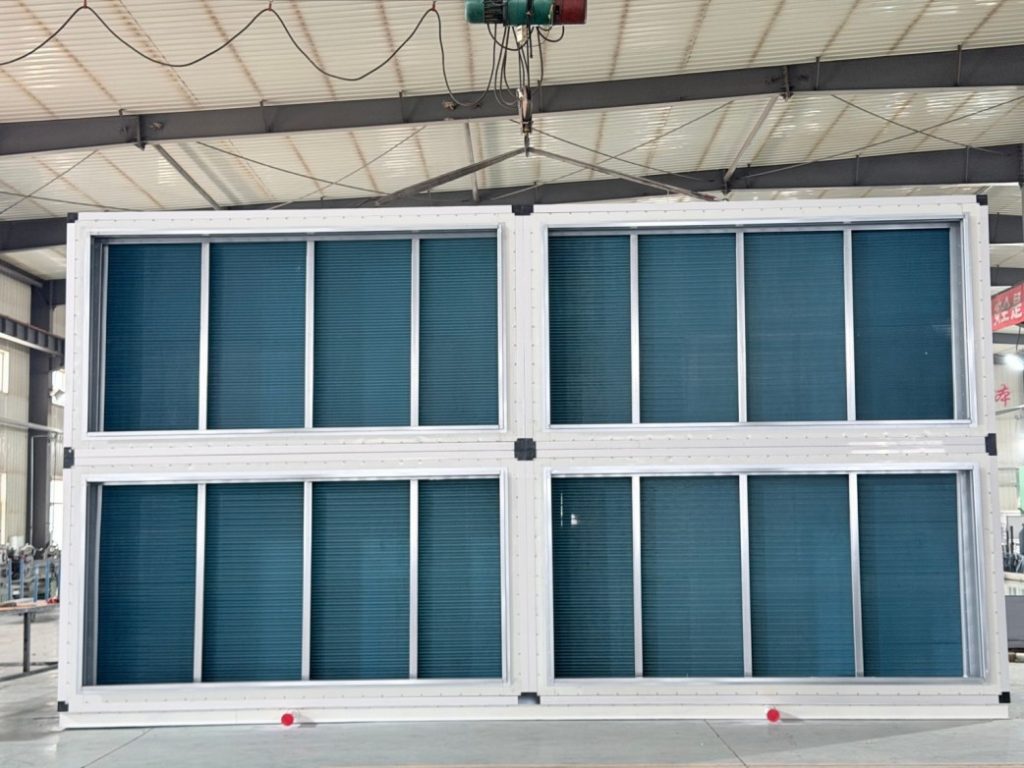
What Is a “Row” in a Heat Pipe Heat Exchanger
In a heat pipe heat exchanger the individual heat pipes are placed in banks and each bank perpendicular to the airflow direction is one “row”. For example, a 4-row unit contains four banks of pipes that air moves through in order.
Think of it like a series of curtains hanging across an airstream. As air moves through each curtain (row), it exchanges more heat with the pipes. More rows generally mean more contact surface and more heat transfer—but the relationship is not quite that simple, as we will get to shortly.
Heat pipe heat exchangers are available in different row configurations, with 2-, 4-, 6-, and 8-row designs commonly considered in many applications. The proper amount is not a one-size-fits-all, it depends on your particular working conditions.
What Changes When You Add More Rows
Adding rows generally increases the available heat transfer surface and can improve heat recovery, but the actual improvement depends on the overall heat exchanger design and operating conditions.
What is important here is that more rows are not necessarily better. Sometimes a properly constructed 4-row unit will out-perform an enormous 8-row unit running at inadequate face velocity. The goal is always to find the configuration that meets your heat recovery target without creating unnecessary pressure drop or installation headaches.
| Row Count | Heat Transfer Potential | Air Resistance | Equipment Depth | Typical Consideration |
| 2 rows | Lower | Lower | More compact | Limited heat recovery requirement |
| 4 rows | Moderate | Moderate | Moderate | Common starting point |
| 6 rows | Higher | Higher | Deeper | Higher recovery requirement |
| 8 rows | High | Higher | Deepest | High recovery where pressure drop allows |
What Affects the Number of Rows
Several factors work together to determine which row count makes sense for a given system.
1. Airflow and Face Velocity
Face velocity—the speed at which air passes through the heat exchanger face — plays a significant role. Face velocity affects both air-side heat transfer and pressure drop, so it needs to be considered together with the required heat recovery and available face area. In certain situations, additional rows may be needed to fulfill the performance requirement. Most applications of HVAC are designed for a face velocity of 2 to 3 m/sec, but this varies by system type.
2. Required Heat Recovery
The higher your target recovery rate, the more rows you will likely need. A system designed to recover 40% of available heat has very different requirements from one targeting 70% or more. The required temperature change and heat recovery target also affect the required heat exchanger size and row configuration.
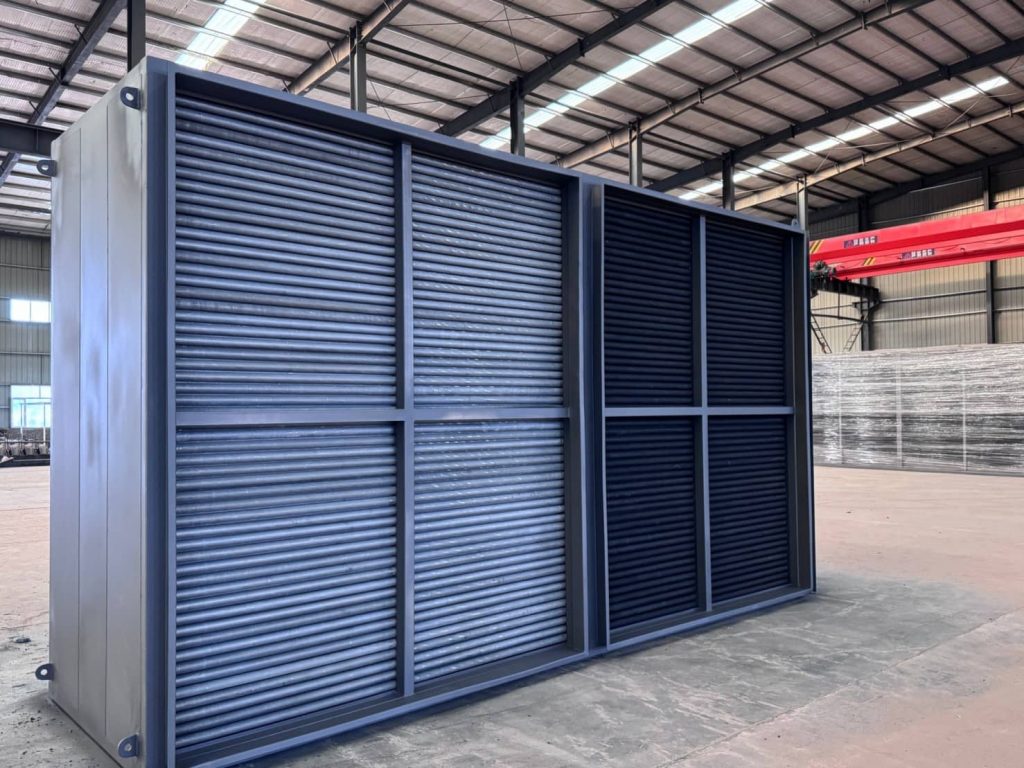
3. Available Space and Equipment Depth
Physical constraints are just as real as thermal ones. Each added row increases the overall depth of the unit. In retrofit projects especially, there is often a hard limit on available installation space. In tighter situations, optimizing fin spacing and fin density within a lower row count can sometimes deliver better results than going deeper.
4. Allowable Pressure Drop
In HVAC system design, air-side pressure drop is a fundamental constraint that affects fan energy consumption and overall system balance. More rows mean more static resistance, and if your fan cannot accommodate the added load, additional rows will hurt system performance rather than improve it. Always check how much additional pressure drop the rest of the air-handling system can accommodate before you settle on a row count.
How to Choose the Right Number of Rows
It is not a guessing game to size heat pipe heat exchangers. It is a systematic process. A sane approach looks something like this:
- Define the operating conditions: Collect your airflow volume, inlet temperatures on both sides, humidity levels if applicable, and the face area accessible. These inputs drive everything that follows.
- Set the heat recovery target: Determine how much heat needs to be transferred, either in kilowatts or as a percentage of total available heat. This gives you a measurable target to design toward.
- Compare suitable row configurations: Run thermal calculations for 2-row, 4-row, 6-row, and 8-row options. Look at how efficiency, outlet temperature, and pressure drop change across each configuration.
- Check pressure drop and installation constraints: Verify that the pressure drop for each candidate configuration stays within what your fan system can handle. Also confirm the unit depth fits the physical space available.
- Select the configuration that meets the requirements: Select the row configuration that meets the thermal and pressure-drop requirements while fitting the available space and overall system design. This typically gives the most cost-effective and energy-efficient result.
What Should You Tell Your Heat Exchanger Supplier
Coming prepared with the right information will speed up the selection process considerably. When reaching out for heat pipe heat exchanger sizing, have the following ready:
The supplier can use these inputs to perform the thermal calculation and recommend a suitable configuration and not just default to the highest row count. If you receive a proposal without having sought any of these inputs, that’s something to wonder about.
Final Thoughts
Number of rows is one of the most direct variables in sizing heat pipe heat exchangers. But it works in conjunction with airflow, face velocity, pressure drop tolerance and physical space, not by itself. The right choice is rarely the configuration with the most rows. It is the configuration that balances recovery efficiency with system compatibility and practical installation constraints.
At DTDX, we have been designing and manufacturing heat pipe heat exchangers for over 18 years across HVAC, healthcare, data center, and industrial applications. If you are working through a sizing decision and want an expert review, share your project parameters with us and we will help you find the right configuration from the start.