

When I look at a heat pipe heat exchanger spec sheet, I usually see the focus on temperature ratings and airflow numbers. There is not quite enough said about condensation which is a key element of how the device works.
At the end of the heat transfer cycle, the vapor condenses back into liquid, releasing heat on the cooler side of the heat pipe. If heat transfer is restricted by operating conditions or other factors, the heat recovery performance may fall even when the system appears to be running normally.
That matters in the field. Many customers end up seeing less heat recovery than they expected. Then they assume something is wrong with the unit. In most cases, the real issue is simpler than people think. We describe below how condensation works in a heat pipe, when it can cause trouble, and how to verify if it is harming your system.
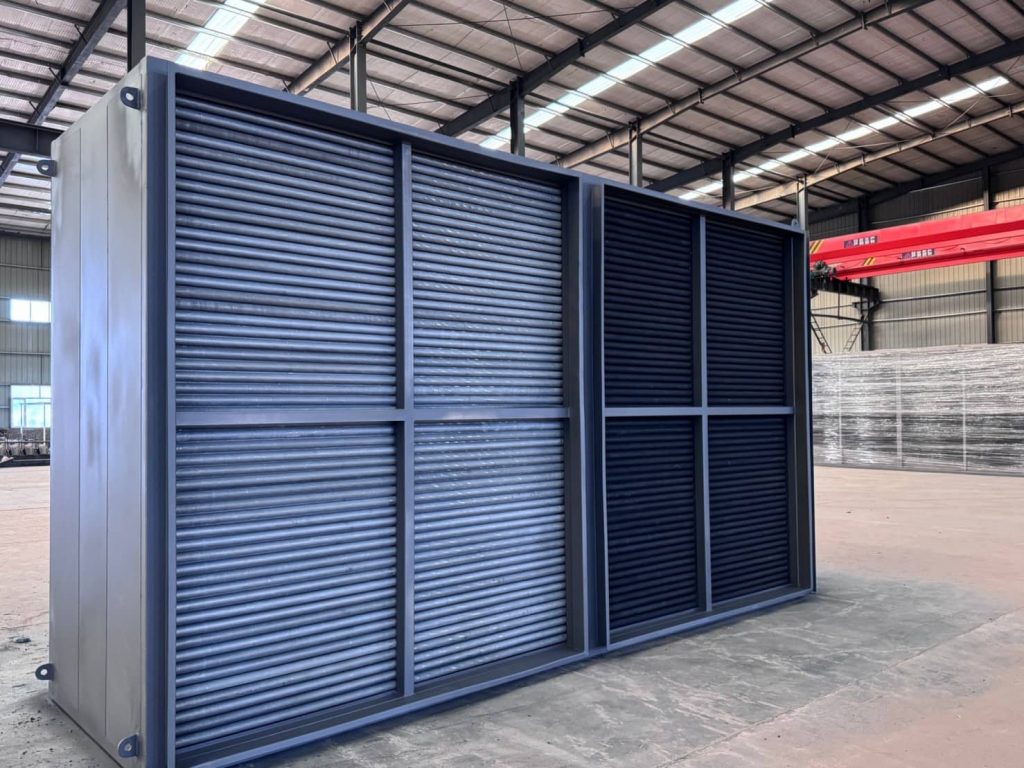
How a Heat Pipe Transfers Heat Through Condensation
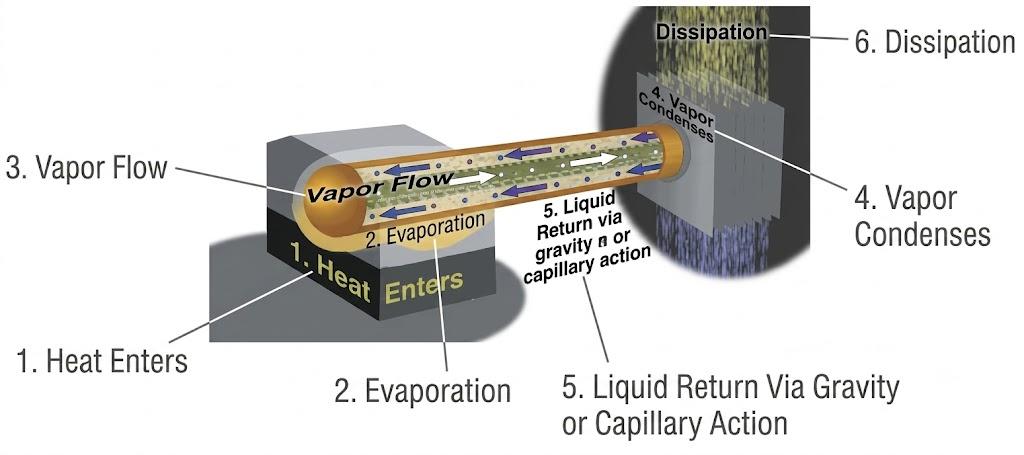
A heat pipe is a sealed tube containing a small amount of working fluid. It transfers heat through phase changes. On the heated side, the liquid evaporates and absorbs heat. The vapor then moves toward the cooler side, where it condenses and releases latent heat. This process allows a heat pipe to transfer substantial amounts of heat through a relatively small tube.
A full cycle has four basic parts:
- Evaporation: The working fluid is heated by the warm wall. It boils away.
- Vapor flow: Vapour flows toward the cooler side of the tube.
- Condensation: The vapour cools and transforms back into liquid. In doing so it gives off heat to the cooler part of the system.
- Liquid return: The condensed liquid returns to the evaporator through a wick, by gravity, or through another mechanism, depending on the heat pipe design.
In heat recovery from heat pipes, the evaporator is frequently placed in the exhaust air stream. Typically the condenser is located in the path of the fresh air coming in. The condenser releases heat to the incoming air, so its heat transfer performance directly affects the overall heat recovery.
When Condensation Becomes a Problem
It is typical for a heat pipe to have condensation inside it. However, heat transfer can be reduced if the heat pipe operates outside its designed temperature range or has an incorrect working fluid charge. These conditions can affect the evaporation-condensation cycle and the heat pipe’s ability to transfer heat.
This is different from condensation on the outside of the heat pipe. When moist air comes into contact with fins that are below the dew point, moisture may condense on their surfaces. If the surface temperature falls below freezing, the moisture may freeze and form frost or ice, restricting airflow and reducing heat transfer. Neither external condensation nor frost alone indicates that the internal condensation process is malfunctioning.
The first obvious indication for operators is often water or frost on the fins. But that does not necessarily mean there is something wrong with the heat pipe itself.
What Can Affect Condensation in a Heat Pipe Heat Exchanger
The performance of condensation, and thus heat recovery, is affected by a number of everyday circumstances. The main factors are listed in the table below.
| Factor | Effect on Condensation and Heat Recovery |
| Temperature difference | A lower temperature differential between hot side and cool side reduces the driving power for heat transmission in general. |
| Airflow and flow rate | The convective heat transfer at the condenser surface is influenced by the air velocity and flow dispersion. |
| Surface cleanliness | Dust and fouling on fins or heat transfer surfaces can increase the thermal resistance. |
| Working fluid and operating range | Heat pipe performance is dependent on fluid characteristics, charge status, and operating temperatures. |
These things are always side by side. For example, a filthy fin surface and limited airflow will negatively impact performance more than each factor would alone.
How to Tell If Condensation Is Affecting Heat Recovery
No extra equipment is needed to begin. Generally you can find your way by making a few simple checks:
- Compare inlet and outlet temperatures: Measure the temperatures of both air streams before and after they pass through the heat exchanger. Smaller-than-expected temperature changes may indicate reduced heat recovery, but the results should also be assessed alongside airflow rates and operating conditions.
- Check airflow and surface cleanliness: Check whether the filters are clogged, the fins are dirty, or the airflow is uneven.
- Review operating conditions: Confirm the unit operates within the design limitations of temperature and humidity.
- Avoid premature conclusions: There are a number of reasons why heat recovery may be reduced and you should check the air flow, the cleanliness of the fins and the operating circumstances before presuming that the heat pipes themselves are problematic.
Keep Condensation in Perspective
Condensation is necessary for the operation of a heat pipe, but is only part of the heat recovery process. It could be an issue with condensation inside the unit, or the air flow is limited, or the fins are dusty. Or you are operating outside the range the unit is designed for. Checking these factors together can help identify the cause before equipment changes are considered.
At DTDX, we help customers understand these factors before deciding whether equipment changes are needed. If your heat recovery results are below expectations, contact our team with details of your operating conditions so we can help you assess the possible causes.