

One of the first things engineers try to get more out of a heat recovery system is to increase the airflow. The logic seems straightforward. Push more air through, transfer more heat, recover more energy. But the fact of the matter is raising the air velocity in a heat pipe heat exchanger is not always the best road to greater results. At some point it can actually decrease the total heat exchange efficiency and increase the running costs.
This article covers the relationship between air velocity and heat transfer in heat pipe systems, what occurs when the face velocity is too high, and some practical recommendations on determining the optimal operating range.
Does Faster Airflow Always Improve Heat Transfer?
Yes, up to a point. The higher air velocity across the fin surface disturbs the thermal boundary layer, therefore facilitating the heat transfer between the air and the heat pipe surface. So, in principle, rising air velocity and heat transfer performance are related.
The problem is that this relation is not proportionate. The convective heat transfer coefficient on the air side does increase with velocity, but it is roughly proportional to the 0.6 to 0.8 power of velocity, not a one-to-one ratio. So every time you shove the air quicker, the additional heat transfer you obtain is less.
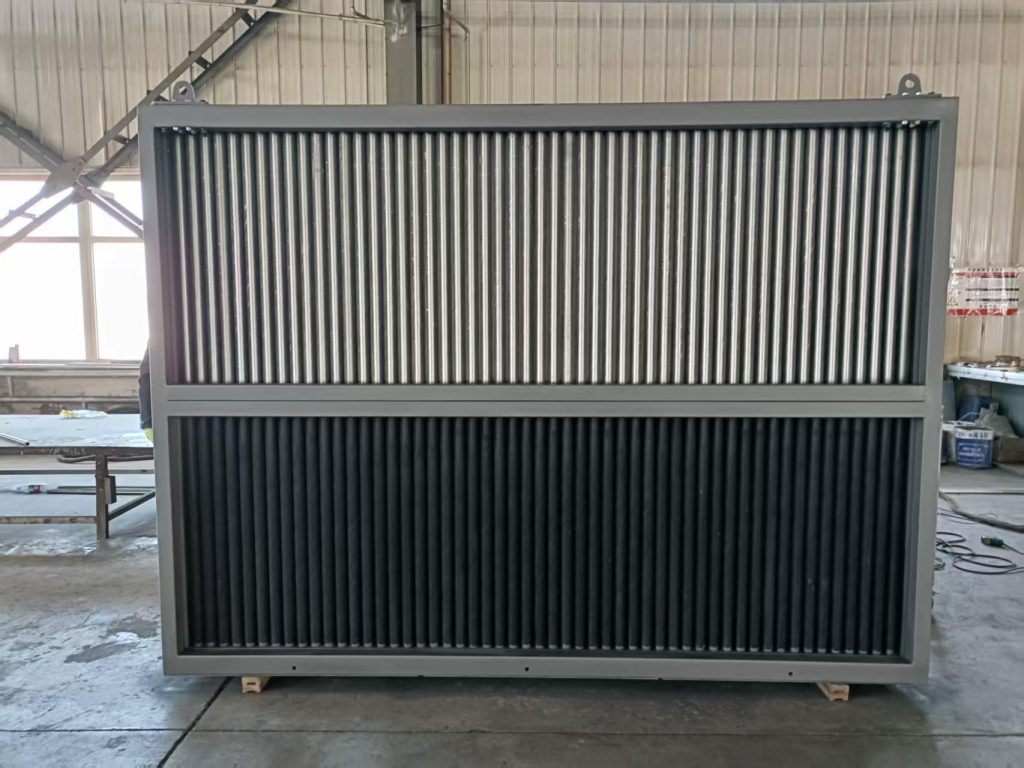
What Happens When Air Velocity Gets Too High?
Increasing the face velocity beyond the recommended range can affect more than just heat transfer performance.
1. Higher Air Velocity Improves Heat Transfer, but the Gains Are Limited
Increasing the face velocity increases the air-side convective coefficient and decreases one of the thermal resistances in the system. But in a heat pipe heat exchanger, the total thermal resistance includes the pipe wall, the internal working fluid and the two air side surfaces.
As air-side thermal resistance decreases, further increases in air velocity have a smaller effect on the overall thermal resistance and heat recovery. The system reaches declining returns sooner than most people imagine.
2. Higher Air Velocity Also Means Higher Pressure Drop
The pressure drop over a heat exchanger is typically proportional to the square of the air velocity. Doubling the face velocity can increase the pressure drop by roughly four times, assuming other conditions remain similar.
In heat recovery applications, this additional fan energy consumption can negate most of the energy savings that you are aiming to achieve. It’s a tradeoff that gets neglected during first design.
3. More Airflow Cannot Make Up for Limited Heat Transfer Area
There is a common assumption that a smaller, faster-flowing system can deliver the same results as a properly sized one. In practice, this does not hold up. The efficiency of the heat exchange depends on the time of contact of the air with the heat transfer surface.
As air velocity increases, the air spends less time passing through the heat exchanger. Although the higher velocity can increase the air-side heat transfer coefficient, the temperature change of the air may become smaller because a larger mass of air is being processed.
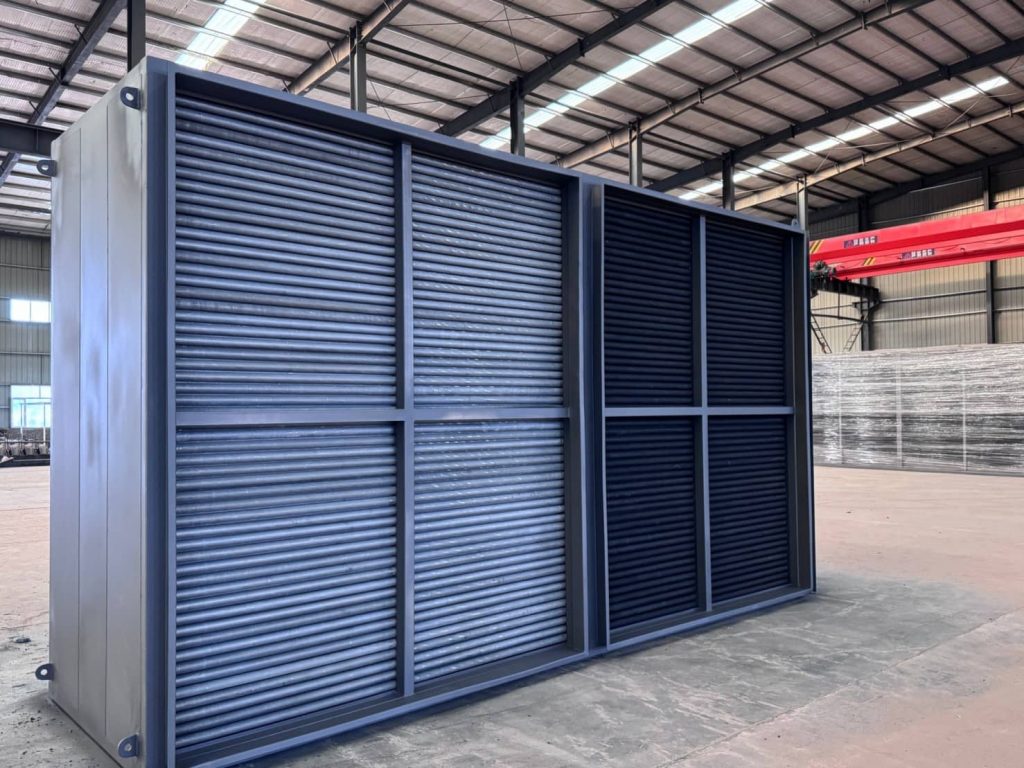
How Do You Choose the Right Air Velocity?
There is no universal optimum air velocity for all heat pipe heat exchangers. The optimal range relies on the application, the geometry of the unit, and the balance of the heat recovery goals with the fan system limits.
For some HVAC and ventilation applications, face velocities around 2 to 3.5 m/s may provide a reasonable balance between heat transfer, equipment size, and pressure drop. However, the suitable range depends on the exchanger design and system requirements. There are some things that should factor into the decision:
- Airflow volume requirement: Your ventilation target determines how much air needs to move. Face velocity then depends on the available face area of the heat exchanger.
- Fan static pressure budget: If your fan system has limited headroom, keeping face velocity moderate avoids overloading it.
- Annual operating hours: Systems that run 24/7 are very sensitive to fan power, thus a little reduction in face velocity can result in substantial energy savings over the course of a year.
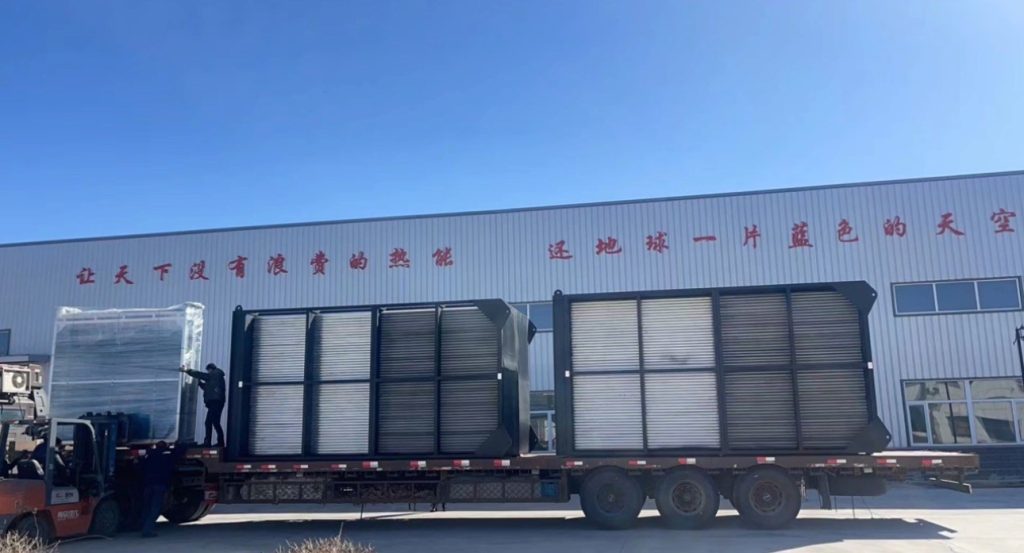
What Other Factors Affect Heat Pipe Heat Exchanger Performance?
Air velocity is one of a number of variables. Row count, fin density, and physical face area of the unit affect the amount of heat recovered and the pressure that the system must overcome. These elements interact, so changing one usually changes the others.
The table below shows how typical design factors affect the possible benefits and trade-offs of a heat pipe heat exchanger system.
| Design Factor | If Increased | Possible Benefit | Possible Trade-Off |
| Face velocity | Airflow speed increases | Higher airflow capacity; potentially higher heat transfer coefficient | Pressure drop increases; fan power increases; diminishing heat recovery gains |
| Face area | Heat exchanger size increases | Lower face velocity; more heat transfer area | Larger equipment footprint |
| Row count | Heat transfer area increases | Potentially higher heat recovery | Pressure drop increases |
| Fin density | Surface area increases | More heat transfer area | Pressure drop increases |
Balancing Airflow, Heat Recovery, and Pressure Drop
Optimizing a heat pipe heat exchanger is not about maximizing any single variable. It is about finding a combination of face velocity, heat transfer area, row count, and fin density that meets your recovery target without imposing excessive pressure losses on the fan system.
The systems that are consistently reliable throughout their whole service life are the ones designed from the ground up with the whole picture of airflow–pressure–temperature. If you chase higher face velocity without regard to the pressure and efficiency trade-offs, you frequently end up with systems that are noisier, more expensive to operate and harder to repair over time.
Every project has various constraints and there is seldom one option that fits all. The important thing is that the design is evaluated as a whole, not optimized for a single parameter in isolation.
If you are designing a new system or revising an old system, DTDX’s technical team is happy to walk through the details with you. With over 18 years of experience in heat pipe heat exchanger design across HVAC, industrial, and medical applications, we can help you find the right balance. Contact us for a free technical consultation.